Boobs in the Night
1943
No user ratings available yet
Representation score: 2.6 out of 10
Representation Score
Minimal
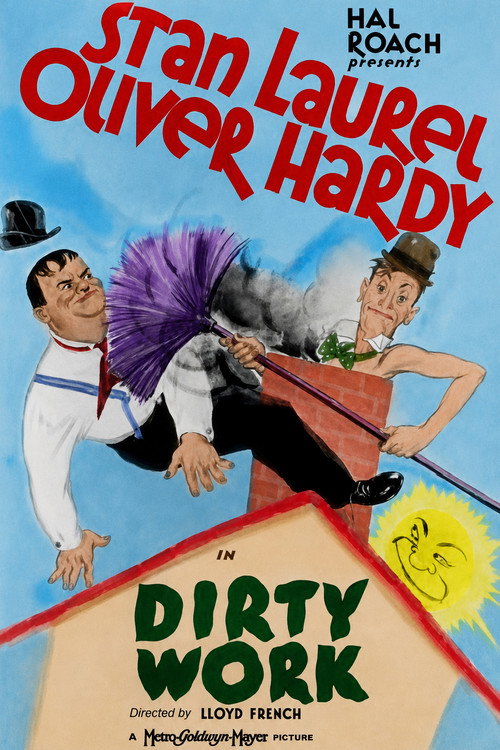
1933
NRDirector
Lloyd French
Runtime
19 minutes
Average Rating
No ratings yetNew Showbiz Analysis
Dirty Work is a product of its time, functioning as a standard slapstick comedy from the early sound era. The narrative is centered around traditional, homogeneous archetypes that do not challenge the social hierarchies of 1933. The film's focus is almost entirely male-centric, revolving around chimney sweeps and a scientist. This lack of complexity in representing diverse identities results in a narrow perspective reflecting the era's conventional comedic structures. Ultimately, the work lacks representation across most modern diversity metrics, relying instead on established genre conventions rather than addressing social or systemic issues.
Category Breakdown
The film does not include any LGBTQ+ characters or narratives. It follows the traditional heterosexual dynamics common in 1930s comedies.
The story revolves around male protagonists and a male scientist. Women do not hold significant roles or challenge traditional gender hierarchies.
The narrative focuses on a specific occupational setting without showing a diverse cast. It likely adheres to the homogeneous casting practices of the time.
This slapstick comedy uses standard genre clichés like the mad scientist. It does not critique Western institutions or systemic power structures.
There is no indication that disability is given a significant role in driving the story. The mad scientist cliché exists but does not center around a character arc related to disability.
Present on Screen
Limited or Absent
Official Synopsis
Stan and Ollie are chimney sweeps working at the home of mad scientist Professor Noodle.
1943
1933
1933
1949
1935
1930
1928
1937
No reviews yet. Be the first to share your thoughts on this movie!
Use the rating form above to leave a star rating and optional review.