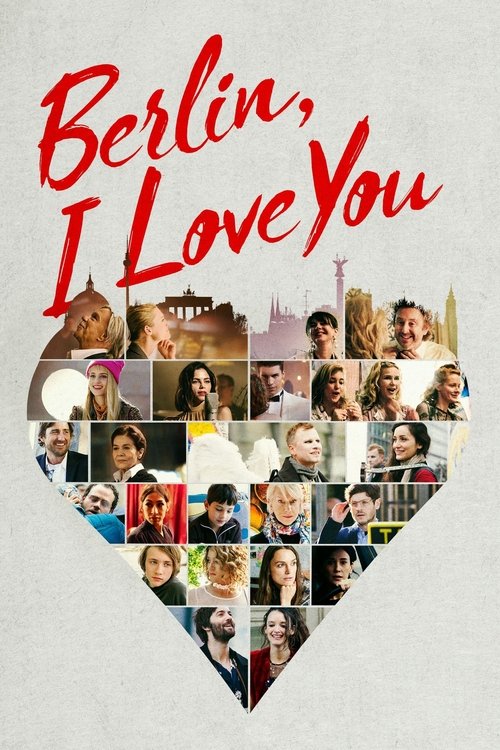
Berlin, I Love You
2019
No user ratings available yet
Representation score: 8.4 out of 10

Representation Score
Excellent
2009
Director
Angela Schanelec, Hans Steinbichler, Fatih Akin, Martin Gressmann, Isabelle Stever, Sylke Enders, Dominik Graf, Christoph Hochhäusler, Nicolette Krebitz, Dani Levy, Wolfgang Becker, Tom Tykwer, Romuald Karmakar, Hans Weingartner
Runtime
152 minutes
Average Rating
No ratings yetNew Showbiz Analysis
This anthology offers a fragmented, kaleidoscopic view of Germany through thirteen distinct directorial voices, challenging monolithic national identity. The collection's strength lies in its structural critique of national cohesion and its diverse creative pedigree. By leveraging varied directorial perspectives, the film successfully challenges traditional hierarchies, particularly regarding gender and multiculturalism. Its fragmented structure allows for a postmodern exploration of the state. However, the work lacks clear evidence of disability representation. While it excels in cultural and racial critique, the specific inclusion of disabled characters as central narrative drivers remains unverified.
Category Breakdown
The anthology includes directors like Dani Levy who integrate queer perspectives, avoiding the focus on traditional nuclear families and allowing for nuanced explorations of diverse identities.
Female directors shift the narrative gaze away from patriarchal perspectives, prioritizing internal psychological landscapes and female-driven stories over traditional hierarchies.
Fatih Akin's inclusion brings a critical perspective on multiculturalism and post-colonial identity, moving beyond homogeneous depictions to highlight diverse voices.
The work challenges traditional institutions and nationalistic fervor, presenting the nation as a collection of conflicting, subjective realities rather than a cohesive, patriotic ideal.
There is insufficient evidence of actively leading portrayals of disability. While the films touch on social realism, specific depictions of neurodivergence or physical disability are not verified.
Present on Screen
Limited or Absent
Official Synopsis
Thirteen German directors present short films exploring the state of their country.
2019
2007
2018
2002

2008
2011
2010

2004
No reviews yet. Be the first to share your thoughts on this movie!
Use the rating form above to leave a star rating and optional review.