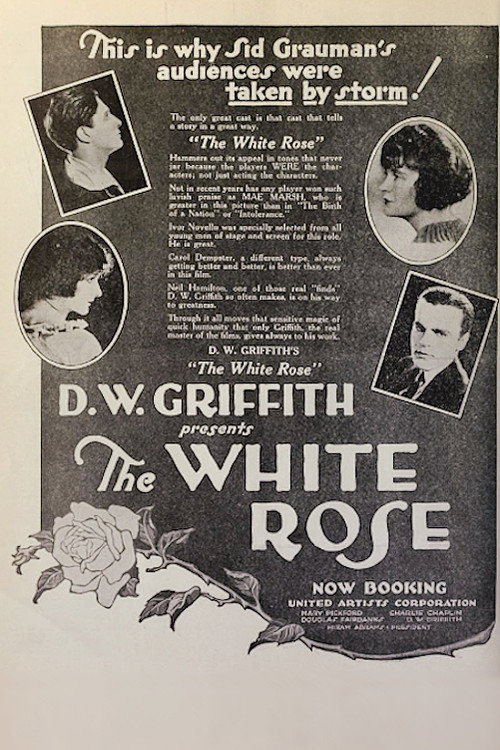
The White Rose
1923
No user ratings available yet
Representation score: 0.8 out of 10
Representation Score
Minimal
1920
NRDirector
D.W. Griffith
Runtime
150 minutes
Average Rating
No ratings yetNew Showbiz Analysis
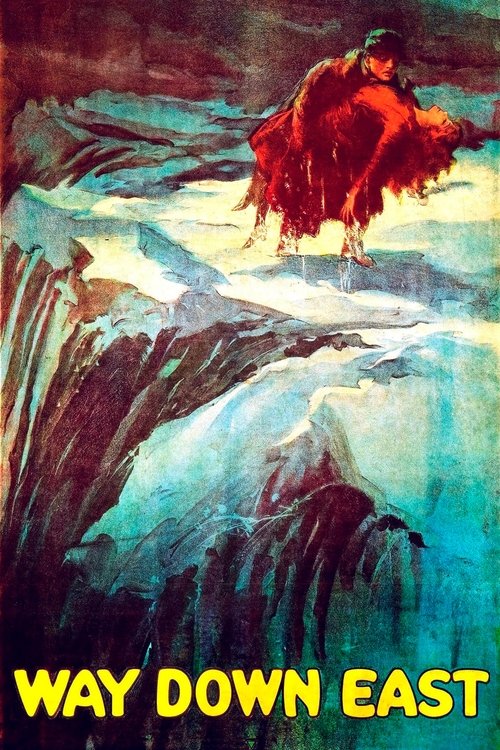
Way Down East is a period-accurate reflection of early 20th-century cinematic values. It prioritizes traditional moral hierarchies and conventional social structures, reinforcing existing power dynamics rather than challenging them. The film's narrative structure focuses on preserving social order through the lens of Victorian-era morality. This is most evident in how the plot handles sexual morality and social responsibility. Ultimately, the work functions as a reinforcement of the social mores of its time, using melodrama to uphold established patriarchal and religious frameworks.
Category Breakdown
The film adheres closely to traditional assumptions about straight relationships. There are no LGBTQ+ characters or representations of diverse gender identities.
The story relies on the 'fallen woman' stereotype, placing the burden of social stigma entirely on the female protagonist. While she drives the emotional storyline, her role is defined by enduring hardship rather than actively challenging societal norms.
Set in rural New England, the cast is predominantly white and uniform. The film lacks characters from non-Anglo-Saxon backgrounds or any intentional diversification of the era's demographics.
The narrative is deeply rooted in Western moralism and religion-based social structures. These institutions act as the primary arbiters of social standing and moral judgment within the community.
There are no prominent depictions of physical or neurodivergent disabilities that serve as central narrative drivers.
Present on Screen
Limited or Absent
Official Synopsis
A naïve country girl is tricked into a sham marriage by a wealthy womanizer, then must rebuild her life despite the taint of having borne a child out of wedlock.
1923

1930
1924

1929

1924

1920
1918
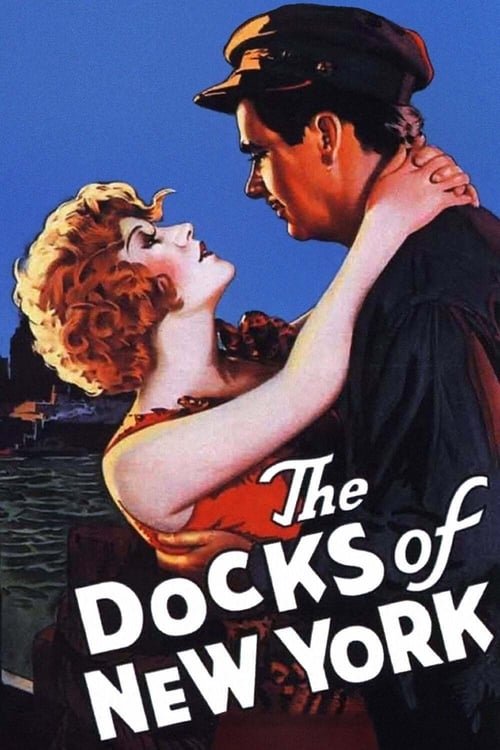
1928
No reviews yet. Be the first to share your thoughts on this movie!
Use the rating form above to leave a star rating and optional review.