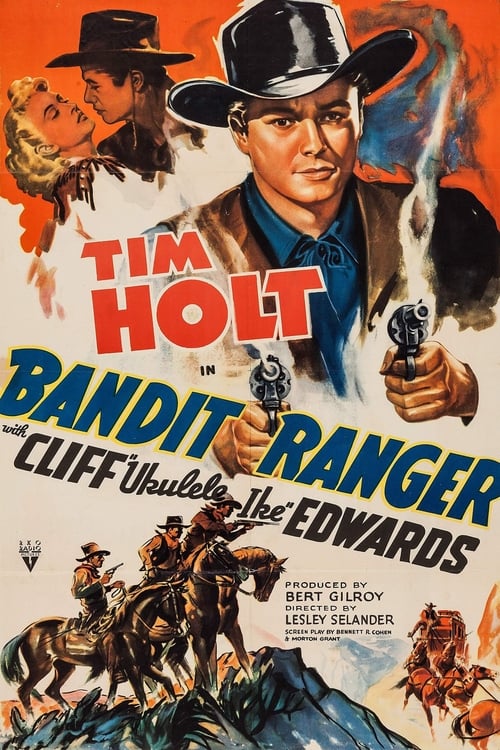
Bandit Ranger
1942
No user ratings available yet
Representation score: 1.2 out of 10

Representation Score
Minimal
1960
PGDirector
George Sherman
Runtime
82 minutes
Average Rating
No ratings yetNew Showbiz Analysis
Hell Bent for Leather is a conventional mid-century Western that adheres strictly to the social hierarchies of its time. The film follows standard genre conventions, emphasizing individualist themes of honor and justice without challenging the period's social order. The narrative relies on traditional archetypes and reinforces the status quo. It prioritizes individualist heroism and does not attempt to expand its demographic representation or critique societal structures. Ultimately, the film serves as a typical representation of the 1960s cinematic landscape, offering no nuanced explorations of identity or systemic critique.
Category Breakdown
The film does not include any visible LGBTQ+ characters or non-straight relationships. The narrative focuses solely on a heterosexual male protagonist.
Gender roles adhere to 1960s norms, with male characters driving the plot. Janet Gifford's character evolves from hostage to ally but remains closely tied to the male-driven storyline.
The cast is entirely made up of white actors, reflecting the historical homogeneity typical of mid-century Westerns. There is no multi-layered casting or diverse representation.
The story upholds traditional Western values such as personal honor and legal order. It avoids criticizing frontier institutions, maintaining a clear distinction between good and bad characters.
There are no identifiable depictions of physical or neurodivergent disabilities. No character's arc is shaped by disability.
Present on Screen
Limited or Absent
Official Synopsis
When Clay Santell stops in the town of Sutterville after having his horse stolen, he is mistaken by townspeople for a murderer named Travers. The townspeople capture Santell, and turn him over to lawman Harry Deckett. Deckett, who is tired of chasing the real Travers, decides to kill Santell and pass him off as Travers. Santell escapes from Deckett, taking lovely Janet Gifford hostage in the process. Janet comes to believe Santell's story, and helps him in his struggle to prove his real identity.
1942
1960
1945

1968
1950
1967
1950

1965
No reviews yet. Be the first to share your thoughts on this movie!
Use the rating form above to leave a star rating and optional review.