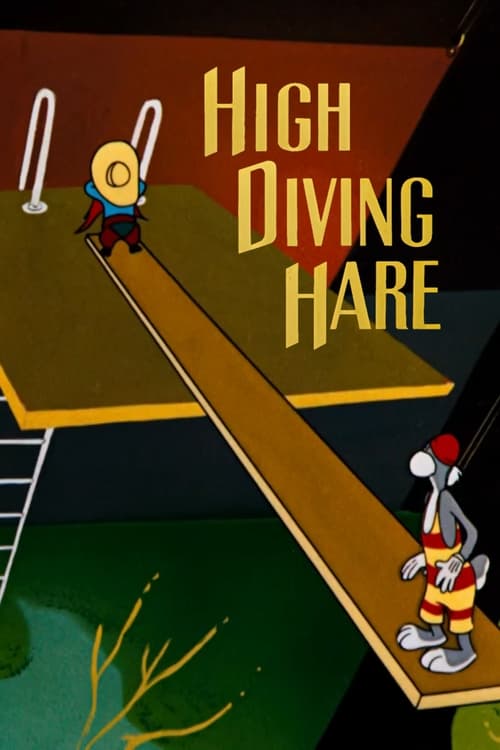
High Diving Hare
1949
No user ratings available yet
Diversity score: 1.3 out of 10

1941
ApprovedDirector
Friz Freleng
Runtime
8 minutes
Average Rating
No ratings yetSynopsis
Bugs Bunny is hunted by Hiawatha, a stereotyped Native American who fills roughly the same role as Elmer Fudd in other Bugs Bunny cartoons of this era.
Overall Score
Minimal
Category Breakdown
LGBTQ+ Representation
The film contains no depiction of queer identities or non-heteronormative themes. The narrative focuses exclusively on the comedic pursuit between the rabbit and the hunter.
Gender Representation
Gender representation is negligible, as the cast consists only of a male-coded hunter and a trickster rabbit. There is no engagement with female agency or gendered social commentary.
Racial & Ethnic Diversity
The film relies on reductive caricatures of Indigenous identity. The character of Hiawatha serves as a comedic foil rather than a nuanced or deep portrayal of Native American culture.
Religious & Cultural Diversity
The story follows a standard, binary hunter-versus-prey trope. It lacks any complex cultural, secularist, or anti-Western themes, adhering to conventional 1940s Western comedic structures.
Disability Representation
There are no characters depicted with physical or invisible disabilities. The short does not engage with neurodivergence or impairment as part of its narrative.
Strengths
Areas for Improvement
AI Analysis
Hiawatha's Rabbit Hunt is a product of the 1940s studio system, prioritizing slapstick comedy over social depth. It relies heavily on established cultural archetypes that reinforce historical stereotypes rather than challenging them. The film lacks meaningful representation across almost every category, including gender, disability, and LGBTQ+ identities. The narrative is driven by a simple, traditional conflict that avoids any intersectional or progressive subversion. Ultimately, the work functions as a time capsule of mid-century animation, utilizing reductive characterizations of Native American identity to serve a standard comedic formula.
1949
1948
1959
1945
1951
1937
1924
1945
1942
1953
1946
1952
No reviews yet. Be the first to share your thoughts on this movie!
Use the rating form above to leave a star rating and optional review.