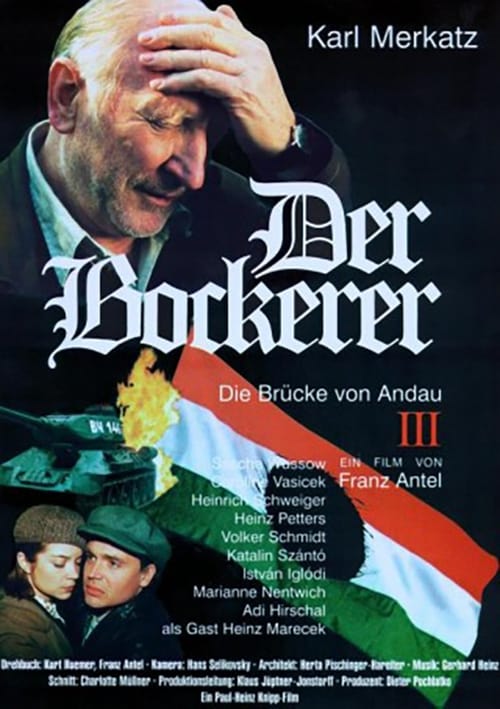
Der Bockerer III - Die Brücke von Andau
2000
No user ratings available yet
Representation score: 3.1 out of 10
Representation Score
Fair
1985
Director
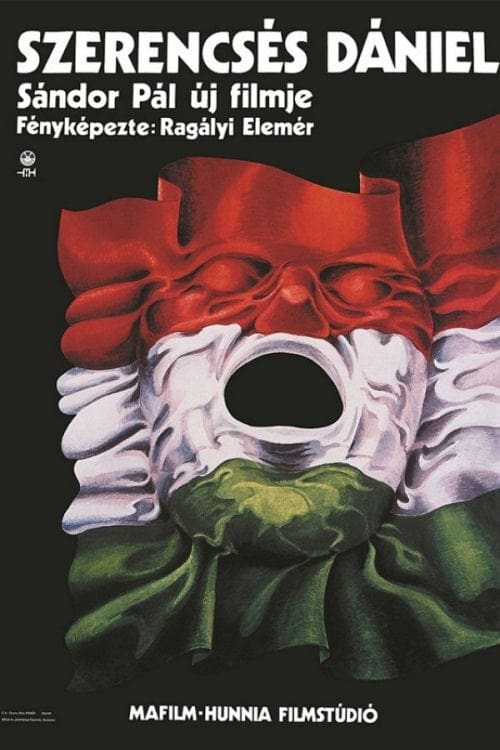
Pál Sándor
Runtime
87 minutes
Average Rating
No ratings yetNew Showbiz Analysis
Daniel Takes a Train is a sophisticated historical drama that prioritizes political and psychological depth over demographic variety. While it lacks representation for LGBTQ+, racial, and gender diversity, it excels in cultural critique. By using surrealist structures, the film deconstructs the Soviet suppression of the Hungarian Revolution, replacing linear, state-approved history with a fragmented, subjective exploration of trauma. Ultimately, the film's value lies in its intellectual resistance to oppression rather than its breadth of identity representation.
Category Breakdown
The film does not include explicit LGBTQ+ characters or narratives that challenge the assumption that everyone is straight or cisgender. Instead, it centers on the political and existential journeys of male characters during the 1956 revolution.
Male characters play a significant role in driving the story, reflecting the historical context where soldiers and refugees were predominantly male. Female characters have limited influence and rarely challenge traditional gender roles.
Set in mid-century Hungary, the film portrays a relatively homogeneous Central European population. It emphasizes national and political identity over the intersection of race and ethnicity.
The film provides a strong critique of systemic power and authoritarianism. It uses surrealism to challenge state-sanctioned history, prioritizing subjective truth over official narratives.
The film does not feature characters with disabilities as central plot devices. The narrative focuses on psychological trauma rather than representing physical or neurodivergent conditions.
Present on Screen
Limited or Absent
Official Synopsis
In December 1956 there is a chaotic situation in Hungary. The revolution is put down by the Soviet army. People leave the country in large numbers for fear of revenge. A young soldier (György Angeli) who also took a part in the revolution, takes a train to Vienna together with his friend (Dániel Szerencsés). Written by Tamas Patrovics
2000
1985

1989
2018
1968
1979
1990
1984
No reviews yet. Be the first to share your thoughts on this movie!
Use the rating form above to leave a star rating and optional review.