
Doraemon: Nobita and the Legend of the Sun King
2000
No user ratings available yet
Diversity score: 3.9 out of 10
2002
Director
Tsutomu Shibayama
Runtime
81 minutes
Average Rating
No ratings yetSynopsis
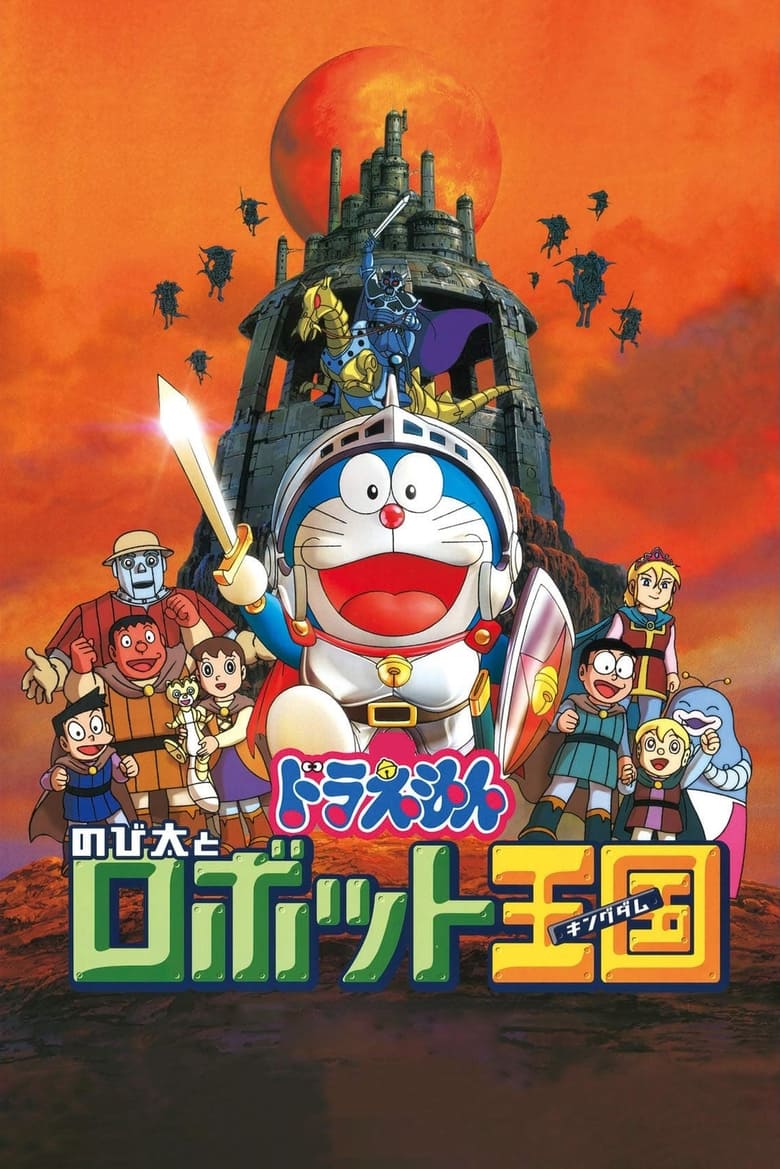
Nobita, Doraemon, and the rest travel to the far future, on an inhabited planet where humans and robots coexist. The Empress of the Robot Kingdom is plotting to strip the robot inhabitants of their emotions, so it's up to Nobita and his friends to stop the plan, while also helping a robot boy named Poko from getting caught in the middle.
Overall Score
Fair
Category Breakdown
LGBTQ+ Representation
The film lacks explicit LGBTQ+ characters or romantic subplots. Social dynamics focus on the core friendship and the bond between humans and robots, adhering to traditional heteronormative structures.
Gender Representation
Gender roles follow traditional archetypes, with Shizuka acting as a moral stabilizer. While she shows agency, the narrative does not significantly disrupt conventional masculine or feminine hierarchies.
Racial & Ethnic Diversity
The human cast is a homogeneous group of Japanese children. However, the film uses the distinction between humans and robots as a metaphor for the systemic 'othering' of minorities.
Religious & Cultural Diversity
The story critiques exclusionary social structures and authoritarianism. It challenges the hierarchy of 'natural' versus 'artificial' life, suggesting that emotion and agency define the soul more than biology.
Disability Representation
No specific physical or neurodivergent disabilities are central to the plot. The robots' struggle to maintain emotional authenticity serves as a thematic subtext for the fight against forced conformity.
Strengths
Areas for Improvement
AI Analysis
The film relies on science fiction metaphors rather than direct demographic representation. While the human cast is culturally specific and lacks LGBTQ+ or diverse racial identities, the narrative uses the robot population to explore systemic marginalization and the ethics of autonomy. By framing the struggle of robots against an authoritarian Empress, the film provides a sophisticated critique of how dominant groups enforce hierarchies. This thematic depth compensates for the lack of literal diversity in the human characters. Ultimately, the work functions as a proxy for real-world social issues, using the 'othering' of non-human entities to discuss the importance of emotional agency and the dangers of institutional control.
2000
2016

1993
1992
2001
1997
1986

1987
2003
1990
1989
1999
No reviews yet. Be the first to share your thoughts on this movie!
Use the rating form above to leave a star rating and optional review.