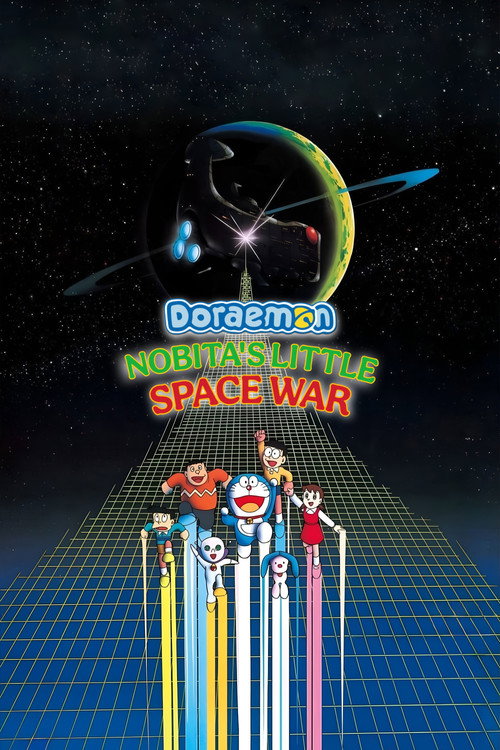
Doraemon: Nobita's Little Star Wars
1985
No user ratings available yet
Representation score: 2.1 out of 10
Representation Score
Limited
1986
Director
Tsutomu Shibayama
Runtime
97 minutes
Average Rating
No ratings yetNew Showbiz Analysis
This 1986 adventure reflects its era with a homogeneous cast and traditional narrative structures. It does not intentionally include diverse identities or characters who reflect more than one aspect of diversity. However, the film offers depth through its science fiction themes. By portraying robotic invaders as displaced refugees, it explores the ethics of coexistence and the humanity of outsiders. Ultimately, its progressive value lies in its thematic exploration rather than character diversity, providing a nuanced perspective on empathy over conquest.
Category Breakdown
The film does not include any LGBTQ+ characters or non-cisgender identities. Relationships focus on traditional friendships and childhood bonds.
Gender roles follow 1980s animation standards. Male characters primarily drive the plot and make key decisions, while Shizuka occasionally shows bravery.
The human characters are a uniform Japanese group. However, the robots in Mecao represent 'the other,' symbolizing displaced entities.
The story explores coexistence and the ethics of conflict. It redefines invaders as refugees, challenging simple good-versus-evil binaries.
There are no prominent portrayals of physical, sensory, or neurodivergent disabilities. Characters function within a typical range of abilities.
Present on Screen
Limited or Absent
Official Synopsis
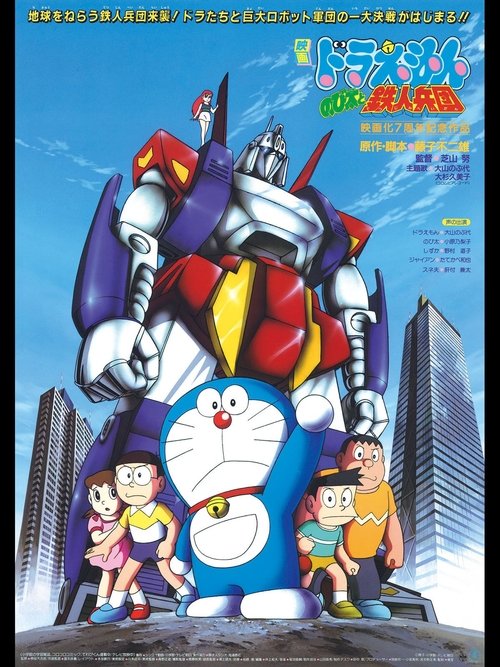
Doraemon and Nobita decide to build a perfect toy robot. However, their creation turns out to be a little more uncanny than an object of appreciation and wonder.
1985
1968
1989
2014

1988

1987
1983

1984
No reviews yet. Be the first to share your thoughts on this movie!
Use the rating form above to leave a star rating and optional review.