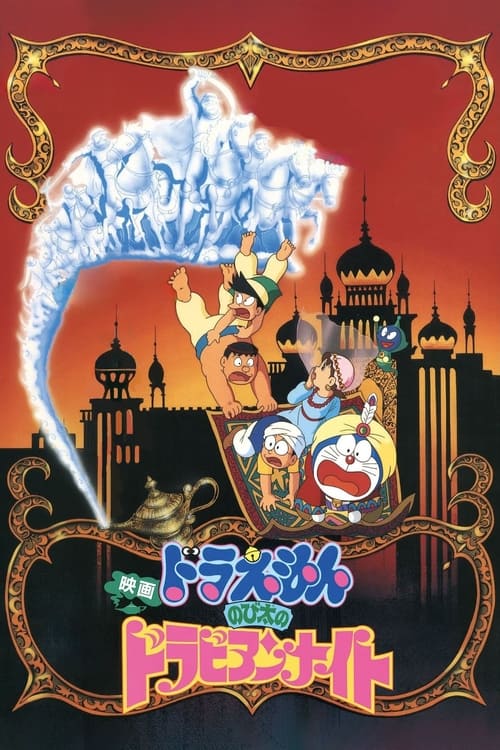
Doraemon: Nobita's Dorabian Nights
1991
No user ratings available yet
Representation score: 1.7 out of 10

Representation Score
Fair
1993
Director
Tsutomu Shibayama
Runtime
100 minutes
Average Rating
No ratings yetNew Showbiz Analysis
The film operates within a traditional demographic framework, offering limited racial, gender, or LGBTQ+ diversity. The human cast remains ethnically uniform and adheres to conventional social roles. However, the film delves into themes of systemic rigidity, providing a philosophical critique through its narrative. By contrasting individual autonomy with an automated social structure, it offers intellectual depth. While the character demographics are conventional, the narrative's exploration of the struggle for personal freedom against a technocratic order adds layers of complexity.
Category Breakdown
The film does not include any characters with LGBTQ+ identities or those who are not cisgender. The character dynamics revolve around the franchise's traditional ensemble.
Shizuka serves as the main female lead in a traditional peer group. The story follows typical gender roles without challenging established hierarchies.
The human cast is ethnically uniform, reflecting a standard Japanese demographic. Mechanical beings represent societal structures rather than ethnic diversity.
The plot explores individual control against a rigid, automated society. It critiques systemic authority by portraying rebels as individuals seeking freedom from an oppressive system.
No characters with visible or hidden disabilities play a key role in the narrative. The focus remains on the group dynamic and mechanical beings.
Present on Screen
Limited or Absent
Official Synopsis
Nobita and his friends find a portal to a mysterious resort filled with metal buildings. They soon discover that the person who opened the portal for them has an ulterior motive.
1991

2014

1989

1986
2011

1998

2003

2001
No reviews yet. Be the first to share your thoughts on this movie!
Use the rating form above to leave a star rating and optional review.