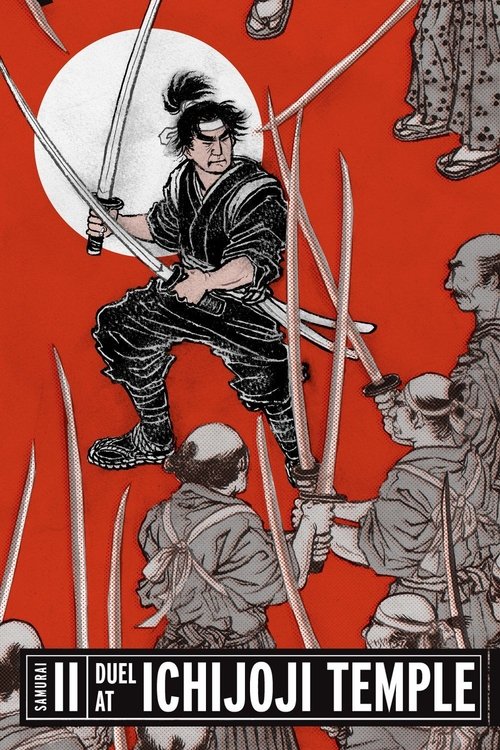
Samurai II: Duel at Ichijoji Temple
1955
No user ratings available yet
Representation score: 1.7 out of 10
Representation Score
Fair
1952
Director
Hiroshi Inagaki
Runtime
135 minutes
Average Rating
No ratings yetNew Showbiz Analysis
Sword for Hire is a traditional historical drama that follows the demographic norms of the 1950s. The narrative centers on complex interpersonal relationships and the breakdown of social stability through intricate love triangles. Though the film lacks modern diversity in terms of LGBTQ+ representation and ethnic variety, it excels in its thematic depth. It transcends simple period clichés to explore moral relativism and the individual's struggle against systemic constraints. Ultimately, the film's strength lies in its character-driven approach to ethics, despite being constrained by the gendered and social limitations of its time.
Category Breakdown
The film does not depict any non-straight relationships or same-sex intimacy. Romantic storylines are confined to traditional heterosexual love triangles.
Female characters such as Kano and O’Ryo play crucial roles in emotional development. However, their influence remains largely reactive and dependent on their relationships with male leads.
The cast is ethnically uniform, reflecting the historical context of Japan. While this avoids whitewashing, it does not engage with diverse racial backgrounds.
The story examines personal loyalties that override official laws. It questions established authority by highlighting individuals navigating strict social hierarchies.
The film uses physical or sensory limitations to give characters unique strengths. The protagonist’s interactions with the world challenge typical views of physical power.
Present on Screen
Limited or Absent
Official Synopsis
Soldiers Hayate and Yaheiji secretly escape from their besieged castle. Hayate has left behind his lover, Kano. On his way, Hayate is wounded and cared for by O’Ryo, who falls in love with him. But when Hayate accidentally kills her caretaker, he flees, with O’Ryo in pursuit. Subsequently, Hayate's comrade Yaheiji falls in love with Oryo. Kano, the lover left behind by Hayate, believes him dead, and becomes involved with another soldier, Jurota. When Jurota defects to the opposing army, he takes Kano with him. A double set of love triangles has developed, wherein each man and each woman loves one and is loved by another. Finally only combat and self-sacrifice can untangle the weave.
1955

1956

1953
1954
1958
1959
1970
1959
No reviews yet. Be the first to share your thoughts on this movie!
Use the rating form above to leave a star rating and optional review.