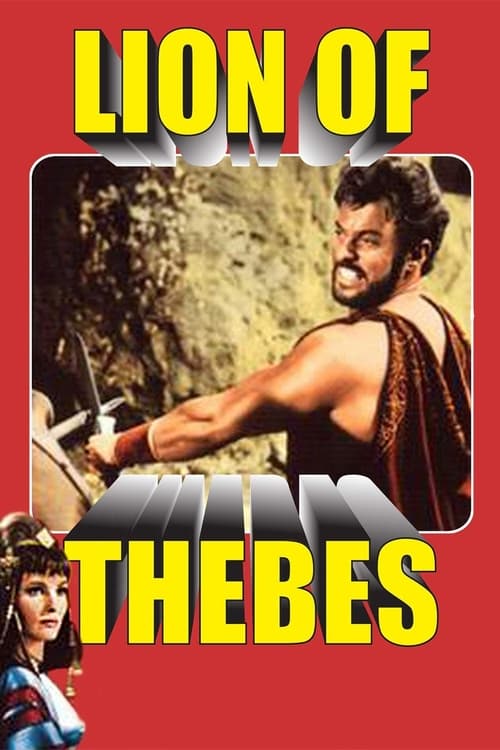
The Lion of Thebes
1964
No user ratings available yet
Diversity score: 1.4 out of 10

1953
ApprovedDirector
George Sherman
Runtime
82 minutes
Average Rating
No ratings yetSynopsis
Antar is sent by Suleiman, head of the Ottoman Empire, to Bagdad to prevent Hammam, Pasha of Bagdad, from purchasing the services of local leader Mustapha to unite the hill tribes and overthrow the emperor. The intrigue mounts as Antar falls in love with dancer Selima, who tries to avenge her father's death against Hammam's right-hand-man Kasseim, whose wife Rosanna has fallen in love with Antar!
Overall Score
Limited
Category Breakdown
LGBTQ+ Representation
The film focuses on heteronormative romantic entanglements between Antar, Selima, and Rosanna. There is no evidence of same-sex intimacy or non-cisnormative identities.
Gender Representation
Female characters drive emotional stakes through romance and vengeance, but men control the political action. This reinforces traditional gender hierarchies and masculine leadership roles.
Racial & Ethnic Diversity
The setting utilizes an Orientalist framework common to 1950s cinema. While the cast is non-Western, the narrative likely relies on exoticized tropes rather than authentic depth.
Religious & Cultural Diversity
The plot centers on imperial politics and tribal intrigue within a Middle Eastern context. It reinforces existing political hierarchies rather than deconstructing them.
Disability Representation
There are no visible or invisible disabilities mentioned or depicted in the character descriptions.
Strengths
Areas for Improvement
AI Analysis
The Veils of Bagdad is a product of its era, adhering to mid-century studio conventions and traditional adventure tropes. The narrative prioritizes clear moral binaries and established social hierarchies, offering little subversion of the status quo. While the film features a non-Western setting, it operates through an Orientalist lens that exoticizes the Middle Eastern backdrop. The character dynamics are largely driven by heteronormative romance and masculine political maneuvering, leaving little room for diverse identity expressions. Ultimately, the film functions as a standard adventure piece where agency is tied to traditional roles. It lacks the complexity required to challenge the cultural or gender norms of the 1950s.
1964
1970
1952
1951
No reviews yet. Be the first to share your thoughts on this movie!
Use the rating form above to leave a star rating and optional review.