
My Joy
2010
No user ratings available yet
Representation score: 5.1 out of 10
Representation Score
Fair
1991
Director
Aleksei Balabanov
Runtime
86 minutes
Average Rating
No ratings yetNew Showbiz Analysis
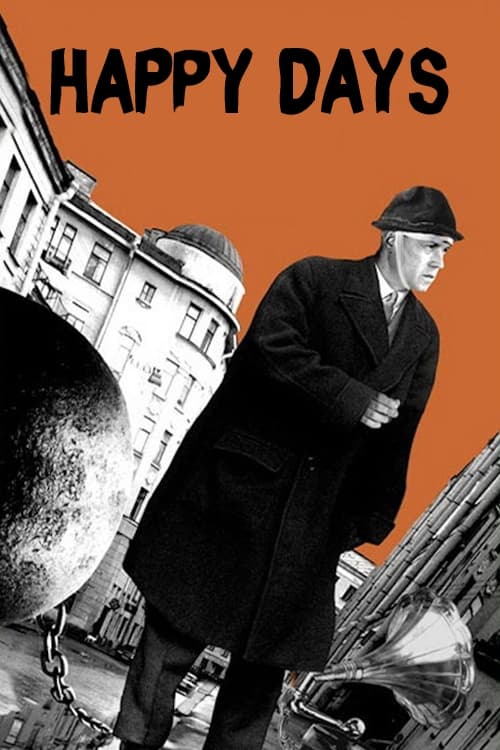
Aleksei Balabanov’s *Happy Days* is a gritty, postmodern exploration of the collapse of the Soviet Union. It employs a non-linear structure to reflect the disorientation of a society in transition, emphasizing the *Chernukha* style of bleak realism. The film’s strength lies in its cultural critique, effectively showing the erosion of traditional institutions like the state and family. It captures a specific moment of systemic instability through a lens of moral relativism. However, the film’s demographic focus is narrow, concentrating almost entirely on a homogeneous, male-centric experience. It offers limited engagement with diverse social perspectives.
Category Breakdown
The film does not include explicit representations of non-straight relationships or same-sex intimacy. Instead, it focuses on the aimless movements of characters within a bleak urban environment, avoiding any direct engagement with LGBTQ themes.
The narrative centers around male-dominated spaces and camaraderie. Women appear in minor roles, such as a deranged prostitute, but they remain peripheral to the main storyline.
The cast is primarily made up of ethnically Russian actors, reflecting the local setting of St. Petersburg. The film does not explore multiculturalism or racial diversity during this period of upheaval.
The film excels at challenging traditional Western and Soviet institutions. It portrays the transition from communism to capitalism as a time of chaotic disorientation and systemic failure.
Psychological instability is used to convey the societal breakdown. Characters with psychological issues do not significantly drive the plot or have substantial ability to act.
Present on Screen
Limited or Absent
Official Synopsis
After being released from a St. Petersburg hospital with a head injury, a nameless protagonist wanders through a desolate, crumbling city in search of a place to stay. As he struggles to reconstruct his identity and find a sense of belonging, he roams the bleak streets and is befriended by an eccentric beggar with a donkey and a slightly deranged prostitute.
2010
1961

2010

1997

2012

1993

2001
1991
No reviews yet. Be the first to share your thoughts on this movie!
Use the rating form above to leave a star rating and optional review.