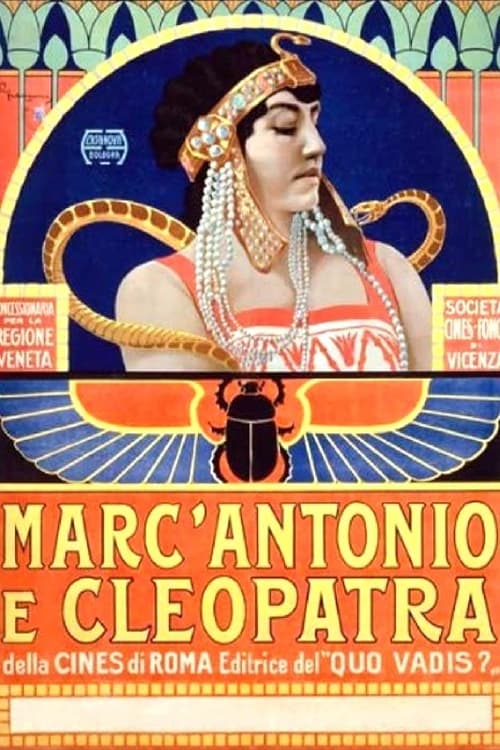
Marc Antony and Cleopatra
1913
No user ratings available yet
Representation score: 1.6 out of 10
Representation Score
Limited
1975
Director
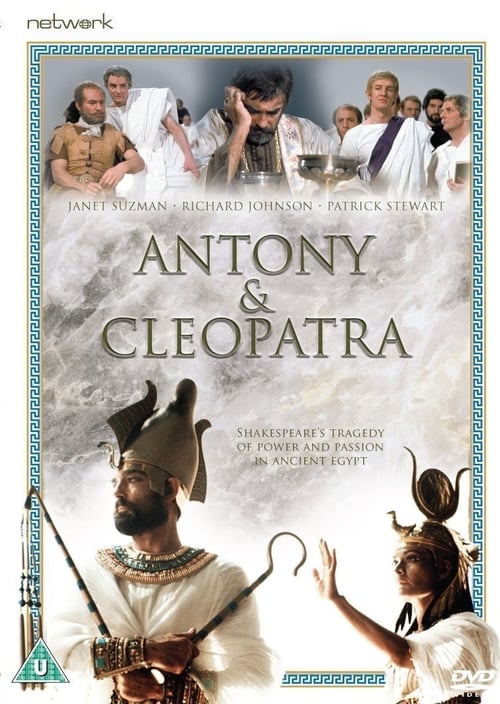
Jon Scoffield, Trevor Nunn
Runtime
161 minutes
Average Rating
No ratings yetNew Showbiz Analysis
The 1975 television adaptation of *Antony and Cleopatra* opens with the stark, geometric minimalism of Trevor Nunn’s Royal Shakespeare Company production, stripping away historical spectacle to expose the raw friction between personal desire and political duty. Janet Suzman’s Cleopatra is not the exoticized seductress of Hollywood tradition but a severe, intellectual sovereign who treats Mark Antony as a political peer and a strategic liability. The camera lingers on the high-minded exchanges between Suzman and Richard Johnson, selling the bond as the moral center of the piece, yet the visual grammar remains cold. It is a psychological chamber piece where the dialogue speaks of honor and love, but the actions are brutal calculations of empire. The film’s argument is that passion is a luxury that gets in the way of statecraft. While the narrative mourns Antony’s weakening and celebrates Cleopatra’s agency in choosing her own death, the final image settles on the consolidation of power by Octavius. Corin Redgrave’s Caesar emerges intact, having absorbed the power of his rivals, and the film does not condemn his ruthlessness. Instead, it presents the Roman state as the inevitable, sterile winner. The sold meaning is clear: love is a luxury that gets in the way of empire, and the only thing that survives is the state. The camera loves the tragedy of the lovers, but the moral verdict belongs to the administrator.
Category Breakdown
The narrative centers exclusively on the heterosexual political alliance between Antony and Cleopatra. No queer identities, relationships, or dynamics are depicted or discussed within the text.
Cleopatra functions as the primary political and moral agent, consistently outmaneuvering Antony in strategic and emotional stakes. The film frames her final choice of death as an assertion of sovereignty rather than a passive tragedy.
The production relies on an entirely white British cast to depict Egyptian and Roman figures, reflecting the era’s theatrical norms. Cleopatra is presented as a European-style aristocrat rather than an exoticized "other," yet non-white actors are absent from the historical setting.
The film treats the Roman state as a sterile, efficient force that ultimately absorbs the chaotic passion of Egypt. Traditional hierarchies of power are upheld as the inevitable outcome, rewarding Octavius’s cold pragmatism over the protagonists’ romantic idealism.
No characters are depicted with physical, sensory, or cognitive impairments. The narrative focuses entirely on political agency, military conflict, and romantic entanglement without involving disability as a thematic or plot element.
Present on Screen
Limited or Absent
Official Synopsis
After the murder of her lover Julius Caesar, Egypt's Queen Cleopatra needs a new ally. She seduces his probable successor Mark Antony. This develops into real love and slowly leads to a war with the other possible successor, Octavius.
1913
1963
2003
1967
1984
1953

1956
1994
No reviews yet. Be the first to share your thoughts on this movie!
Use the rating form above to leave a star rating and optional review.