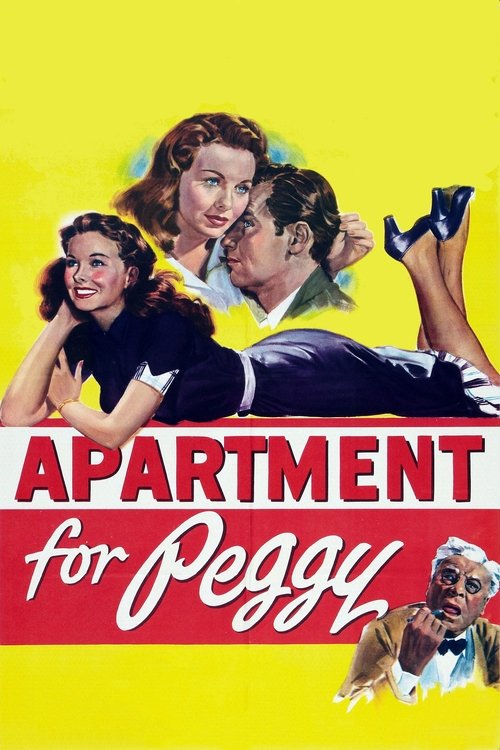
Apartment for Peggy
1948
No user ratings available yet
Diversity score: 1.8 out of 10
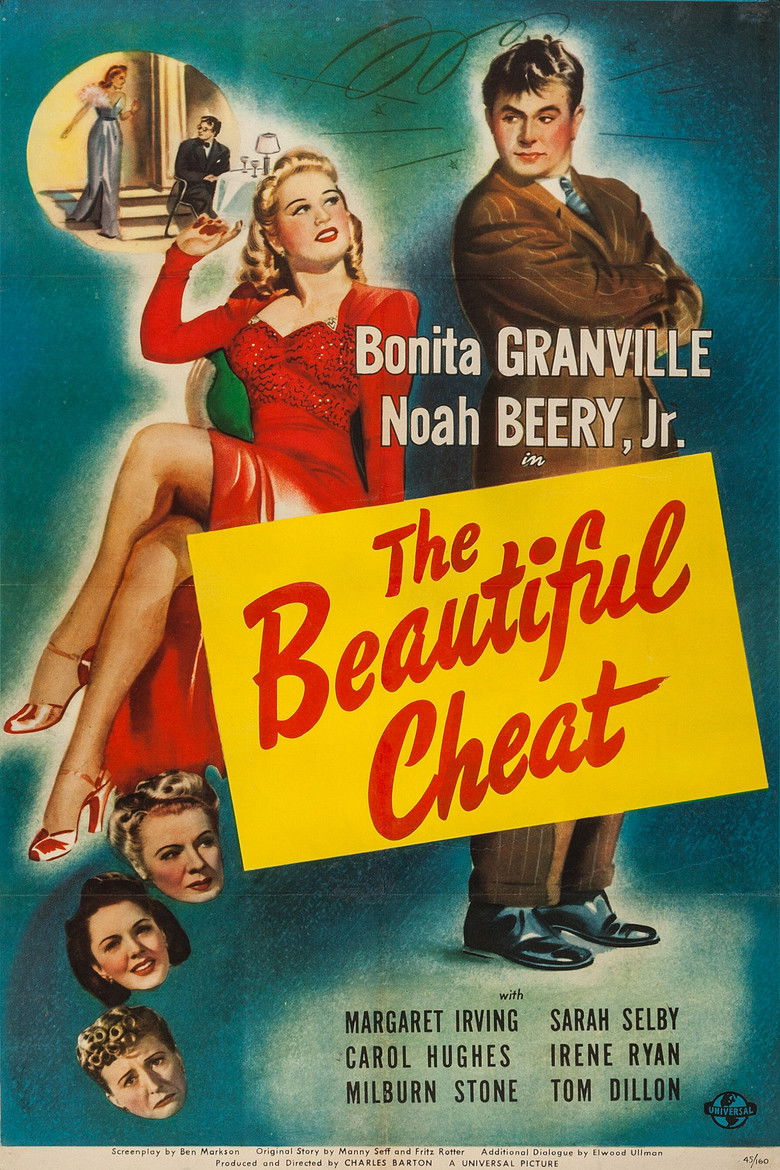
1945
ApprovedDirector
Charles Barton
Runtime
59 minutes
Average Rating
No ratings yetSynopsis
The title character, played by Bonita Granville, is the secretary at a boys' reformatory. Sociology professor Noah Beery Jr. shows up to study the juvenile-delinquent mindset. Not surprisingly, he ends up taking a post-grad course in amour from the winsome Ms. Granville.
Overall Score
Limited
Category Breakdown
LGBTQ+ Representation
The film lacks any depiction of non-heteronormative identities or same-sex intimacy. The romantic arc follows a conventional heteronormative structure between a professor and a secretary.
Gender Representation
Bonita Granville’s character displays notable agency and social intelligence, driving the romantic plot. However, the story remains anchored in traditional 1940s courtship dynamics.
Racial & Ethnic Diversity
The narrative focuses on a standard mid-century American setting. There is no evidence of a diverse cast, reflecting the homogeneous casting norms of the era.
Religious & Cultural Diversity
The film explores sociology and institutional settings but reinforces traditional Western social structures. It lacks any significant critique of these established institutions.
Disability Representation
There are no visible or invisible disabilities depicted within the character arcs or the central narrative.
Strengths
Areas for Improvement
AI Analysis
The Beautiful Cheat is a conventional mid-century production that operates within the established social and romantic hierarchies of its time. While it avoids systemic subversion, it offers minor deviations from standard tropes through its female lead. The film's primary strength lies in its slight subversion of gendered power, giving the female secretary a level of social command. However, the lack of diverse casting and the adherence to heteronormative romance limit its broader social impact. Ultimately, the film serves as a typical example of 1940s studio storytelling, prioritizing individual romantic pursuit over any meaningful exploration of diverse identities or social critiques.
1948
1949
1934
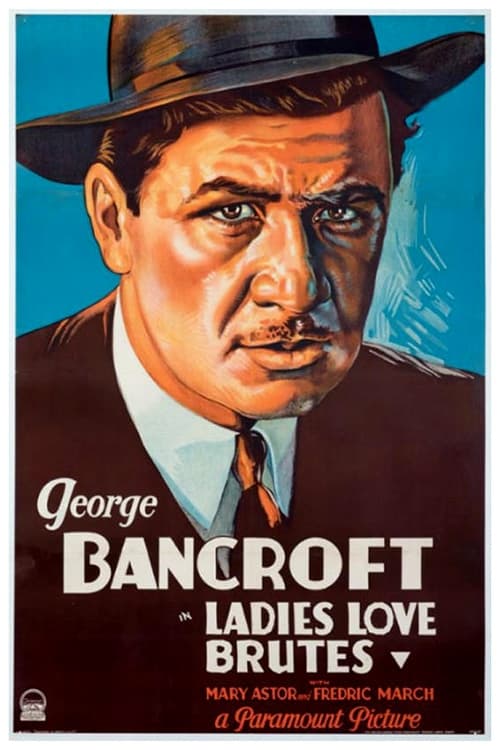
1930
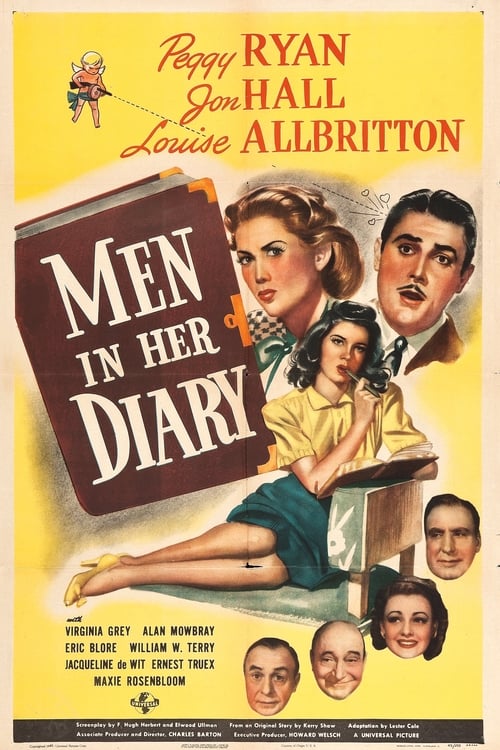
1945
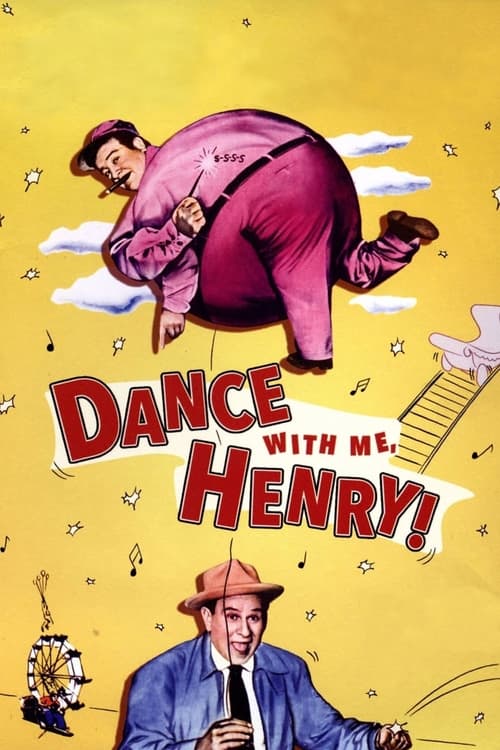
1956
No reviews yet. Be the first to share your thoughts on this movie!
Use the rating form above to leave a star rating and optional review.