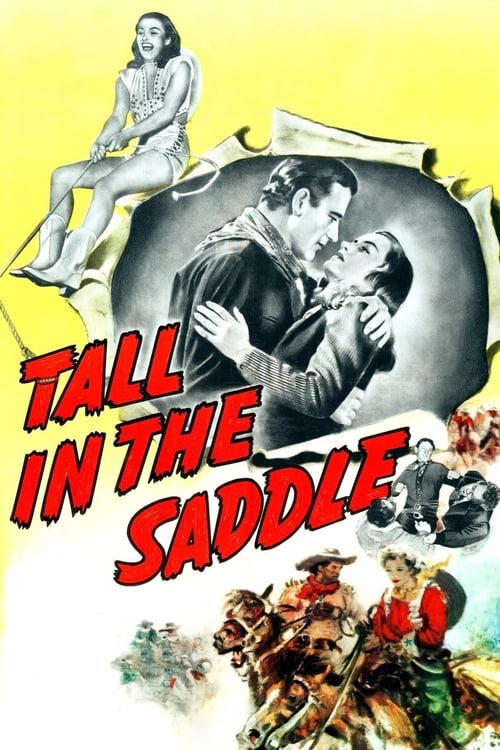
Tall in the Saddle
1944
No user ratings available yet
Diversity score: 1.4 out of 10

1951
NRDirector
Edwin L. Marin
Runtime
84 minutes
Average Rating
No ratings yetSynopsis
Raton Pass is a curious western based on the rules of Community Property. Dennis Morgan and Patricia Neal portray a recently married husband and wife, each of whom owns half of a huge cattle ranch. Neal is a tad more ambitious than her husband, and with the help of a little legal chicanery she tries to obtain Morgan's half of the spread. He balks, so she hires a few gunslingers to press the issue. In a 1951 western, the greedy party usually came to a sorry end; Raton Pass adheres strictly to tradition.
Overall Score
Limited
Category Breakdown
LGBTQ+ Representation
The film adheres strictly to the heteronormative standards of the early 1950s. There is no evidence of non-cisnormative gender identities or same-sex intimacy within the narrative.
Gender Representation
Patricia Neal provides a rare display of female ambition and agency for the era. However, this drive is framed as a moral failing, positioning her as a criminal antagonist.
Racial & Ethnic Diversity
The cast appears homogeneous, focusing on Anglo-centric property disputes. There is no evidence of diverse ethnic perspectives or color-blind casting in this Western.
Religious & Cultural Diversity
The story reinforces traditional Western values and a singular moral code. It prioritizes the sanctity of property rights and established social order over any cultural critique.
Disability Representation
There are no identifiable depictions of visible or invisible disabilities within the film's narrative or character descriptions.
Strengths
Areas for Improvement
AI Analysis
Raton Pass serves as a quintessential example of mid-century Hollywood's adherence to traditional social and moral orthodoxies. While it offers a slight subversion of gender roles by giving the female lead significant agency, it ultimately uses that agency to punish her for deviating from domestic norms. The film lacks intersectional complexity, focusing almost exclusively on Anglo-centric property disputes and the preservation of established hierarchies. It functions more as a cautionary tale regarding greed and marital stability than a nuanced character study.
1944
1930
1946
1949
1938
1955
1924
1947
1950
1952
1962

1956
No reviews yet. Be the first to share your thoughts on this movie!
Use the rating form above to leave a star rating and optional review.