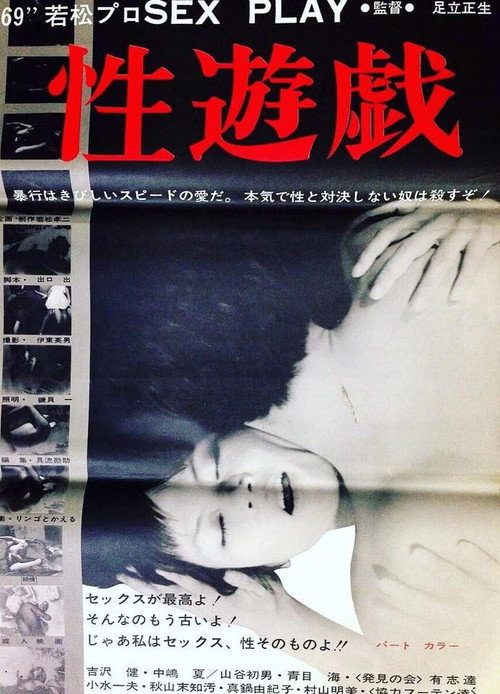
Sex Play
1969
No user ratings available yet
Diversity score: 6.3 out of 10
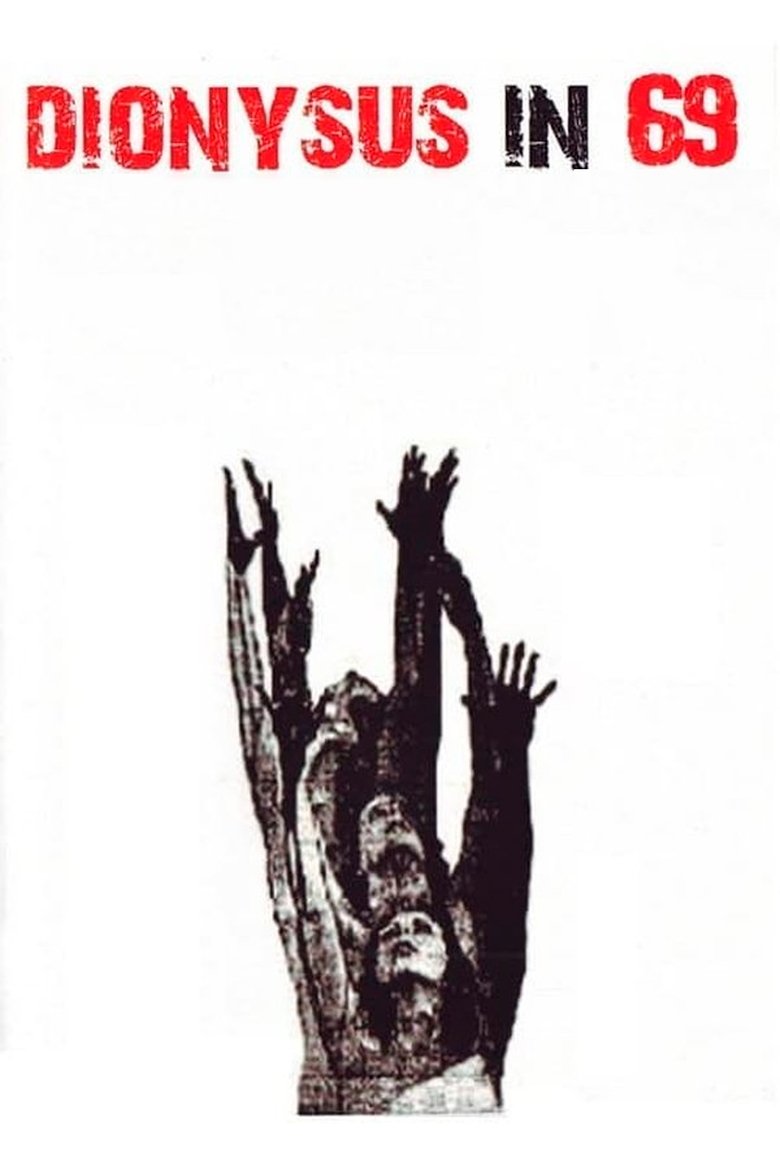
1970
XDirector
Brian De Palma, Robert Fiore, Bruce Joel Rubin
Runtime
85 minutes
Average Rating
No ratings yetSynopsis
Filmed stageplay based on the ancient greek play The Bacchae written by Euripides. This play is performed by members of The Performance Group, an NYC experimental theater group who has made their own personal adaptation of this ancient text.
Overall Score
Good
Category Breakdown
LGBTQ+ Representation
The film captures the sexual liberation of the late 1960s. While lacking specific queer protagonists, it prioritizes non-cisnormative gender expressions and challenges heteronormative domesticity through fluid identities.
Gender Representation
The production actively subverts traditional hierarchies by centering Dionysian themes of ecstasy. It deconstructs traditional masculinity by rejecting the stable male leader archetype in favor of collective, chaotic energy.
Racial & Ethnic Diversity
Reflecting the NYC experimental theater scene, the film features a diverse range of ethnic backgrounds. The casting reflects counterculture multiculturalism rather than the homogeneous depictions found in mainstream media.
Religious & Cultural Diversity
The film offers a profound critique of Western institutionalism and organized religion. It celebrates dropout culture and rejects middle-class authority, framing systemic conformity as a restrictive structure.
Disability Representation
There is no significant evidence regarding the portrayal of visible or invisible disabilities within the work.
Strengths
Areas for Improvement
AI Analysis
Dionysus in '69 is a postmodern collage that uses Euripides' ancient myth to critique 1969 social hierarchies. By blending classical text with counterculture aesthetics, the film disrupts linear American narratives in favor of a communal, psychedelic experience. The work excels at deconstructing Western institutional norms, including capitalism and the nuclear family. It replaces rigid patriarchal structures with a focus on fluid identity and collective energy, making it a significant artifact of cultural deconstruction. While the film succeeds in portraying multiculturalism and gender fluidity, it lacks explicit queer protagonists and specific disability representation. Its impact is felt most strongly through its anti-establishment framework and rejection of traditional authority.
1969
1990
2016
1989
2008
1984
1977
2009
1968

1965

1992

1980
No reviews yet. Be the first to share your thoughts on this movie!
Use the rating form above to leave a star rating and optional review.