
A Boy and His Samurai
2010
No user ratings available yet
Representation score: 5.2 out of 10
Representation Score
Fair
2018
Director
Kazushi Watanabe
Runtime
94 minutes
Average Rating
No ratings yetNew Showbiz Analysis
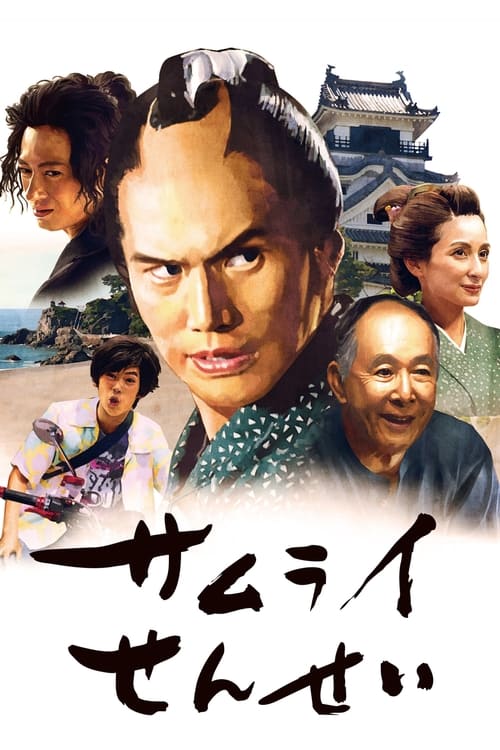
Samurai Sensei is a genre-driven exploration of temporal displacement rather than a broad study of diverse demographics. The film uses the 'fish-out-of-water' cliché to examine how historical archetypes interact with contemporary social structures. While the film does not significantly represent most identity categories, it achieves its purpose through cultural critique. By placing a feudal warrior in a modern cram school, the narrative deconstructs traditional authority and the evolution of mentorship.
Category Breakdown
The film does not include explicit LGBTQ+ characters or narratives. It primarily focuses on cultural differences between the Edo period and modern Japan, emphasizing traditional social structures.
The story revolves around a male samurai transitioning into a modern teaching role. There is no indication of female characters holding positions of intellectual or physical dominance.
As a Japanese production, the cast and setting are ethnically uniform. The narrative explores the concept of 'otherness' across time periods rather than racial or ethnic diversity.
The film employs a samurai archetype to contrast traditional feudal society with modern capitalist education systems. This comparison highlights the effectiveness and changes in social institutions over time.
There is no evidence of characters with visible or invisible disabilities in the film's context.
Present on Screen
Limited or Absent
Official Synopsis
Hanpeita Takeichi, a samurai, finds that he has travelled through time to modern-day Japan. He's taken in by an old man who runs a cram school, and begins to work as a teacher there.
2010

2018

2016

2022

1999

2015

2009

2024
No reviews yet. Be the first to share your thoughts on this movie!
Use the rating form above to leave a star rating and optional review.