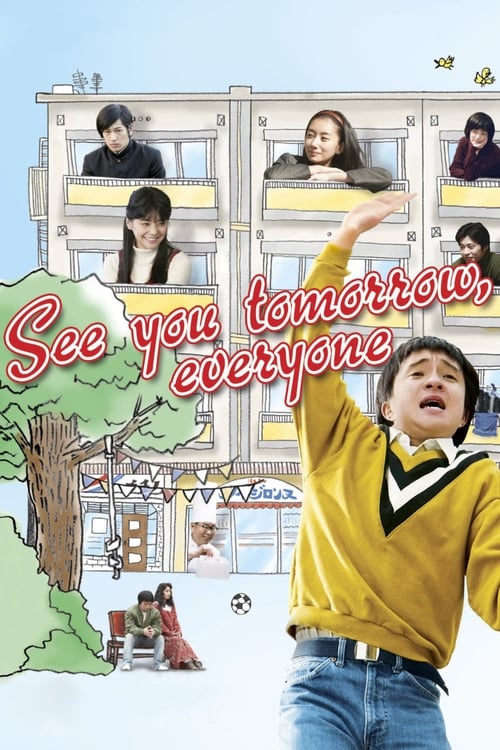
See You Tomorrow, Everyone
2013
No user ratings available yet
Diversity score: 5.2 out of 10

2015
Director
Akiko Ohku
Runtime
119 minutes
Average Rating
No ratings yetSynopsis
In 1980, Ayuko is a new transfer student in Okayama from Tokyo. She doesn't have any friends and relies on her boyfriend Hideo who is a college student. Ayuko likes to draw a romance manga of herself and her boyfriend. Ayuko's classmate, Takemi, becomes a huge fan of Ayuko's manga and they become close friends. Due to an incident though, they drift apart. 30 years later, Ayuko is now a manga artist and comes back to Okayama to give a lecture at her former high school. There, Ayuko meets Takemi who is now a teacher.
Overall Score
Fair
Category Breakdown
LGBTQ+ Representation
The film explores the intense, formative bonds of female friendship during adolescence. While it lacks explicit queer identities, it avoids harmful heteronormative tropes by prioritizing emotional intimacy.
Gender Representation
Female agency sits at the absolute center of the cinematic experience. The narrative subverts traditional hierarchies by focusing on the girls' social autonomy rather than male-driven plot progression.
Racial & Ethnic Diversity
Set in a rural Japanese village, the film features a culturally homogeneous cast. It provides an authentic, localized depiction of Japanese life without engaging in whitewashing.
Religious & Cultural Diversity
This slice-of-life story focuses on the subjective experiences of growing up. It prioritizes individual emotional truth over religious morality or rigid social conformity.
Disability Representation
There are no prominent characters depicted with visible or invisible disabilities. The film does not use disability as a plot device or for mockery.
Strengths
Areas for Improvement
AI Analysis
Fantastic Girls succeeds as an intimate study of female social ecosystems. By centering the narrative on the internal hierarchies and autonomy of young girls, the film effectively disrupts patriarchal storytelling structures. The focus remains on character-driven social development rather than traditional masculine archetypes. However, the film's scope is culturally and demographically narrow. The homogeneous cast and lack of explicit LGBTQ+ representation limit its intersectional breadth. While it offers an authentic look at a specific Japanese milieu, it does not engage with broader diverse perspectives. Ultimately, the film is a meaningful exploration of female agency. It trades broad intersectional visibility for a deep, localized focus on the complexities of female friendship and adolescent growth.
2013

2008

2017

2008

2009

2008

2010
2005

2007
2014

2008

2015
No reviews yet. Be the first to share your thoughts on this movie!
Use the rating form above to leave a star rating and optional review.