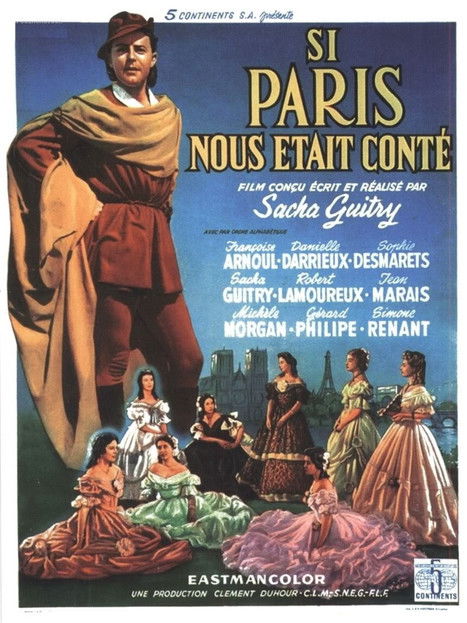
If Paris Were Told to Us
1956
No user ratings available yet
Representation score: 2.2 out of 10

Representation Score
Limited
1938
Not RatedDirector
Sacha Guitry
Runtime
98 minutes
Average Rating
No ratings yetNew Showbiz Analysis
Sacha Guitry’s 1938 film reflects its specific historical and geographical context, emphasizing theatrical wit and historical continuity over diverse representation. The narrative structure centers on a Eurocentric view of Parisian history, limiting the range of characters. While Guitry’s style allows for intellectual engagement among women, the film remains confined by the traditional social hierarchies of 1930s France. It serves more as a celebration of cultural heritage than a tool for challenging societal norms. Ultimately, the film lacks representation for LGBTQ+ identities and non-white characters. It remains a traditional work reflecting the era's limited approach to diverse casting and underrepresented identities.
Category Breakdown
The film doesn't include any explicit LGBTQ+ characters or stories. Given the time period, queer identities may be hidden or coded, offering no visible control over their own lives.
Women appear as sharp-witted and complex characters in social comedies. However, they mostly follow traditional gender roles and social hierarchies of the 1930s.
The film focuses on a Eurocentric cast of Parisians. There are no non-white characters with significant control over the plot.
The film celebrates Western cultural heritage through a historical perspective. It doesn't offer a modern critique of Western institutions or capitalism, focusing instead on social manners.
There is no information about the portrayal of physical or neurodivergent disabilities in this film.
Present on Screen
Limited or Absent
Official Synopsis
The history of one of France's most famous streets is retold, featuring multiple performances from Guitry himself.
1956
1955

1942

1939
1934
1939

2023

1953
No reviews yet. Be the first to share your thoughts on this movie!
Use the rating form above to leave a star rating and optional review.