Flowing
1956
No user ratings available yet
Representation score: 3.3 out of 10
Representation Score
Fair
1968
Director
Teruo Ishii
Runtime
92 minutes
Average Rating
No ratings yetNew Showbiz Analysis
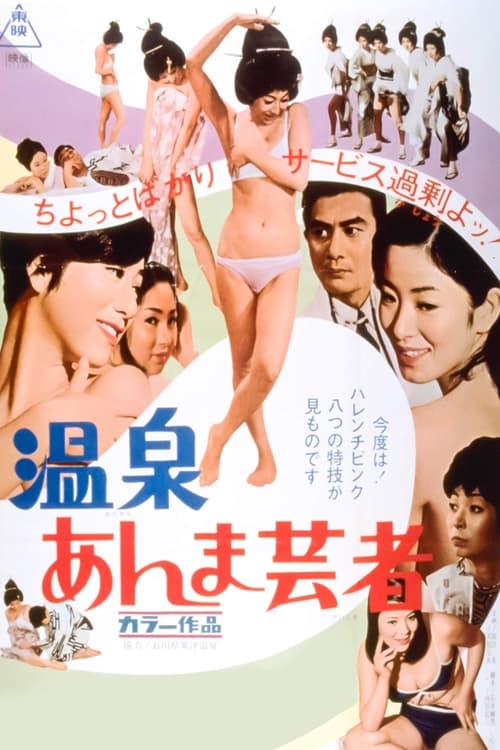
Teruo Ishii’s work disrupts traditional social norms by focusing on the fringes of respectable society. The film places ability to act within a female-led ecosystem, subverting gender hierarchies by depicting masculinity as a commodified force. However, the film remains culturally homogeneous, reflecting the specific social landscape of 1968 Japan without broader diversity. Ultimately, the film studies women's ability to drive the story and moral relativism, challenging institutional norms through its depiction of a fluid, situational ethics typical of the ero-guro tradition.
Category Breakdown
The film explores the intense social dynamics and rivalries within a female-dominated dormitory. Although no explicit same-sex romance is confirmed, the story focuses on internal power struggles rather than traditional heterosexual relationships.
The narrative centers on a female collective, where women have primary control over their economic and social lives. Men are shown in transactional roles, depicted as commodified forces rather than leaders.
The production features a culturally homogeneous cast typical of 1960s Japanese cinema. It provides a deep look into a specific subculture without exploring diverse racial backgrounds.
By focusing on a underrepresented troupe, the film critiques rigid social hierarchies and traditional morality. The plot involving an abandoned baby challenges the sanctity of the conventional family unit.
There is no discernible evidence regarding the portrayal of physical or neurodivergent disabilities within the narrative.
Present on Screen
Limited or Absent
Official Synopsis
A look at the lives of a troupe of geishas working in a small seaside resort town. For the most part, their lives consist of greeting boatloads of oversexed businessmen and providing bawdy entertainment through the evening followed by private companionship at night, interspersed with occasional catfights with the rival geisha house. Their routine is suddenly thrown off by the appearance of an abandoned baby in the geishas' dormitory, followed by its disappearance only a short time later. Who could be responsible for such a thing?
1956

1956
1964
1952

1999
1987
1983
1953
No reviews yet. Be the first to share your thoughts on this movie!
Use the rating form above to leave a star rating and optional review.