
The Hitler Gang
1944
No user ratings available yet
Representation score: 0.4 out of 10
Representation Score
Minimal
1973
PGDirector
Ennio De Concini
Runtime
106 minutes
Average Rating
No ratings yetNew Showbiz Analysis
Ennio De Concini’s drama emphasizes historical reconstruction and psychological realism over contemporary inclusive storytelling. The film adheres strictly to the demographic constraints of its 1945 setting, resulting in a homogeneous cast and narrow social scope. The narrative structure reinforces the traditional hierarchies of the Third Reich. By focusing on the disintegration of the Nazi high command, the film documents a specific historical reality rather than attempting to challenge traditional formulas or introduce multi-layered perspectives. Ultimately, the film serves as a bleak study of a singular political entity's collapse. It lacks intentional demographic disruption, choosing instead to mirror the era's social structures and racial hierarchies.
Category Breakdown
The film does not depict any non-straight or non-cisgender identities. It focuses solely on heterosexual relationships and assumes everyone is straight or cisgender.
The story centers around traditional gender roles and hierarchies. Although Eva Braun is a key figure, women are mainly defined by their relationships with central male characters.
The cast is predominantly white and European, reflecting the homogeneity of the 1945 German political elite. Modern color-blind casting techniques are not used.
The film presents a historical reconstruction of the fall of a regime. It avoids moral relativism and focuses on the psychological state of the characters during their defeat.
There are no characters defined by physical impairments or neurodivergence. The narrative focuses on the political and military status of the bunker's inhabitants.
Present on Screen
Limited or Absent
Official Synopsis
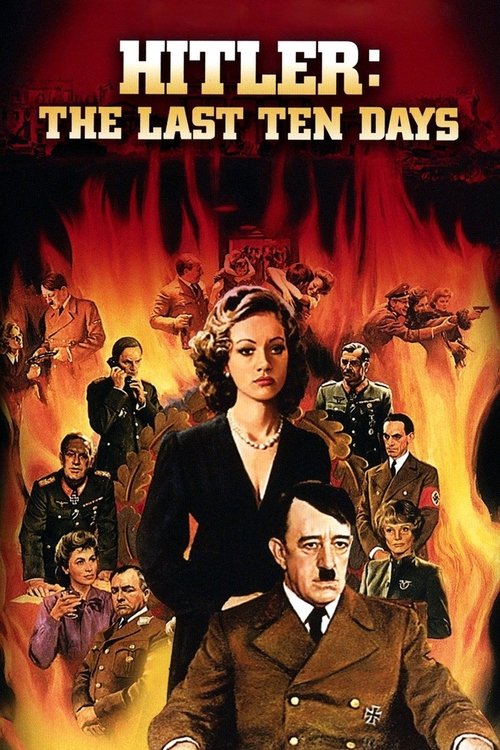
Hitler: The Last Ten Days takes us into the depths of der Furher’s Berlin bunker during his final days. Based on the book by Gerhard Boldt, it provides a bleak look at the goings-on within, and without.
1944

2015

1955

1951
2008
1966

1955

1981
No reviews yet. Be the first to share your thoughts on this movie!
Use the rating form above to leave a star rating and optional review.