A Rare Bird
1935
No user ratings available yet
Representation score: 0.6 out of 10
Representation Score
Minimal
1940
Director
Gustaf Gründgens
Runtime
89 minutes
Average Rating
No ratings yetNew Showbiz Analysis
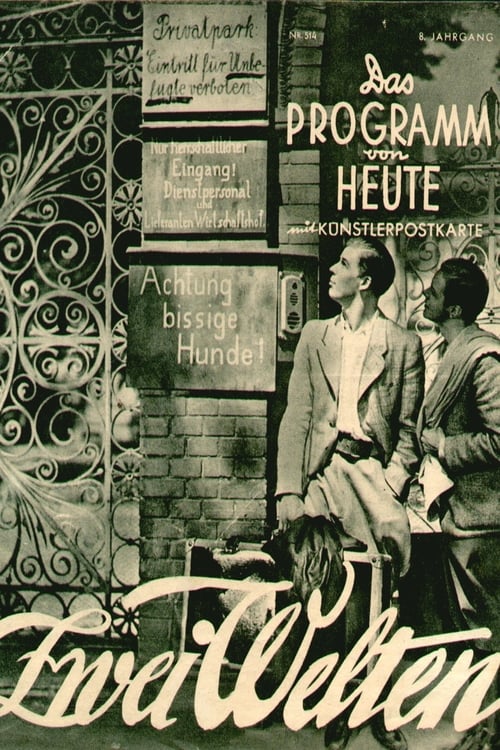
Two Worlds is a period comedy that reinforces the social hierarchies of its time. The plot revolves around a class-based trick played by a foreman’s son and a noble friend, highlighting traditional social structures. The film lacks complexity in representing diverse racial, ethnic, or LGBTQ+ identities, staying within the conventional norms of 1940s German cinema. Ultimately, it serves as a light-hearted comedy of errors that upholds rather than challenges the established status quo.
Category Breakdown
The film does not depict any non-binary or LGBTQ+ identities. It focuses solely on a comedic misunderstanding between two male characters.
The story centers around male-driven actions and masculine roles. Women do not hold positions of social or intellectual authority in the narrative.
The setting reflects a homogeneous society with no ethnic diversity. The story focuses on class distinctions within a localized European context.
The comedy relies on traditional social hierarchies between nobility and workers. These hierarchies are treated as fixed rather than being critiqued.
There is no information available regarding characters with visible or invisible disabilities in this production.
Present on Screen
Limited or Absent
Official Synopsis
A foreman’s son and his noble friend, who have voluntarily arrived from Berlin to help out with the harvest, switch their billeting coupons while on the journey, so as to play a trick on the estate owner, who is related to one of them. The wrong boy is asked to sit at the estate owner’s table, while the real relative is pushed off on the servants. And so begins a game of confusion with amusing results.
1935

1940

1932
1952

1932
1967

1952

1988
No reviews yet. Be the first to share your thoughts on this movie!
Use the rating form above to leave a star rating and optional review.