
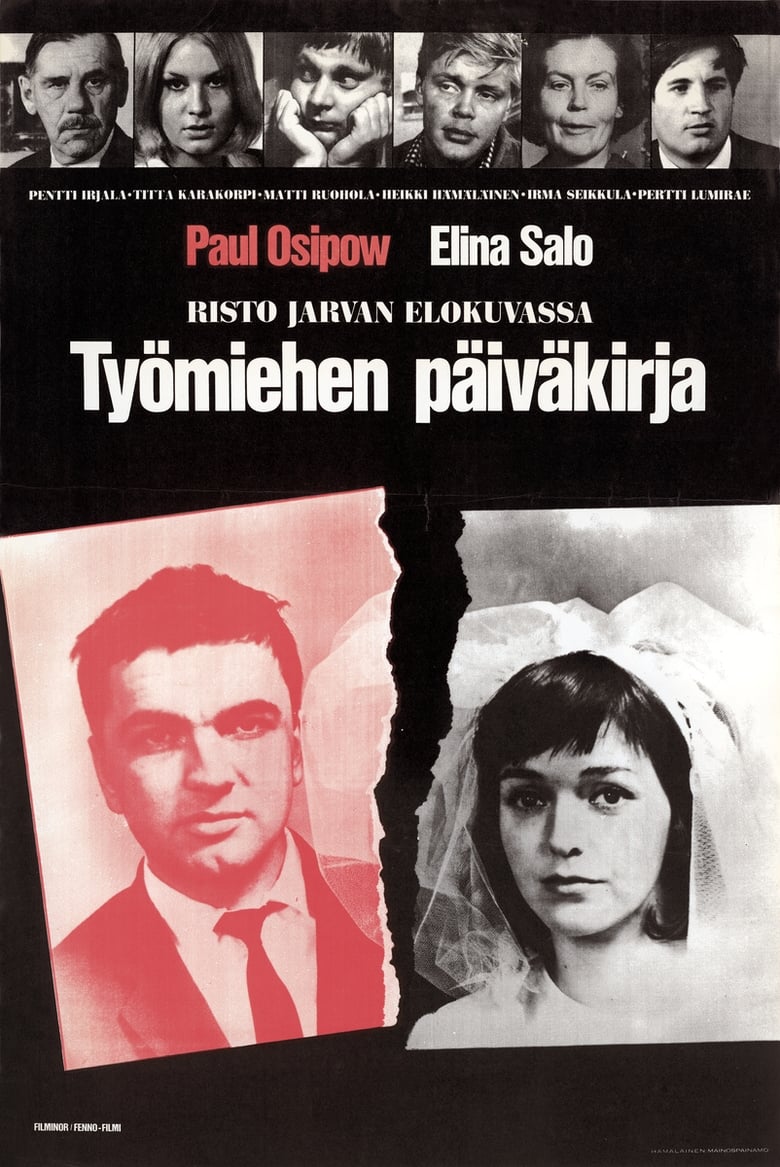
One Man's War
1974
No user ratings available yet
Diversity score: 3.8 out of 10
1967
Director
Risto Jarva
Runtime
92 minutes
Average Rating
No ratings yetSynopsis
Juhani, a welder and Ritva, a right-wing backgrounded, future clerk get married. Soon we see that their marriage seems to be all about long business trips, housing problems, concerns about the money and political disagreements.
Overall Score
Fair
Category Breakdown
LGBTQ+ Representation
The film centers on the heteronormative marriage of Juhani and Ritva. There are no queer narratives or non-cisnormative identities present in this social realist study.
Gender Representation
The story explores shifting labor roles through Ritva's transition into clerical work. It examines how professional identities and gendered expectations intersect with marital stability and domestic tension.
Racial & Ethnic Diversity
Set in 1960s Finland, the film reflects the demographic homogeneity of the era. It focuses on the socioeconomic stratification of the Finnish working class rather than ethnic diversity.
Religious & Cultural Diversity
The narrative provides a strong critique of industrial capitalism and its impact on the proletariat. It deconstructs the romanticized nuclear family by highlighting political and economic friction.
Disability Representation
There is no discernible focus on physical or neurodivergent representation within the narrative. The film remains centered on class and labor dynamics.
Strengths
Areas for Improvement
AI Analysis
Risto Jarva’s film is a social realist study that prioritizes class dynamics over identity-based representation. It succeeds in deconstructing the idealized mid-century domestic unit by framing marriage through the lens of economic and political struggle. While the film offers a nuanced look at how labor roles affect gendered identities, it lacks modern intersectional markers. The narrative is confined to the demographic homogeneity of 1960s Finland, offering little in the way of racial or LGBTQ+ diversity. Ultimately, the film's strength lies in its systemic critique of industrial capitalism. It views the individual not through personal identity, but through their negotiation with oppressive economic structures.
1974
1980

1964

1961

1949
1949
1955
1994

1968

1979
1957
1975
No reviews yet. Be the first to share your thoughts on this movie!
Use the rating form above to leave a star rating and optional review.