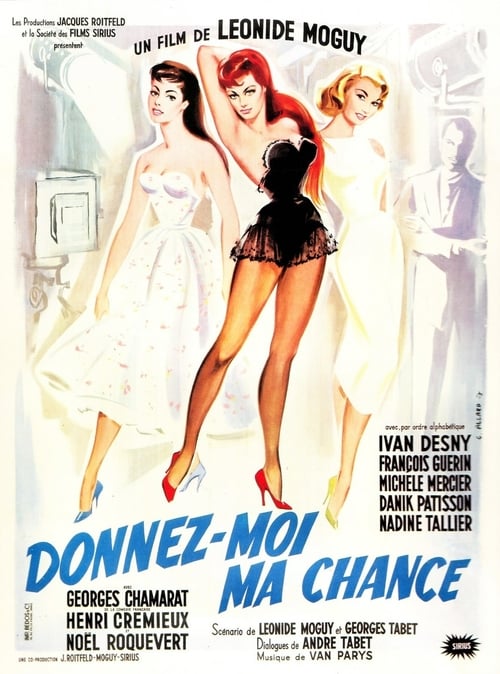
Give Me My Chance
1957
No user ratings available yet
Representation score: 3.3 out of 10
Representation Score
Minimal
1958
12Director
Géza von Bolváry
Average Rating
No ratings yetNew Showbiz Analysis
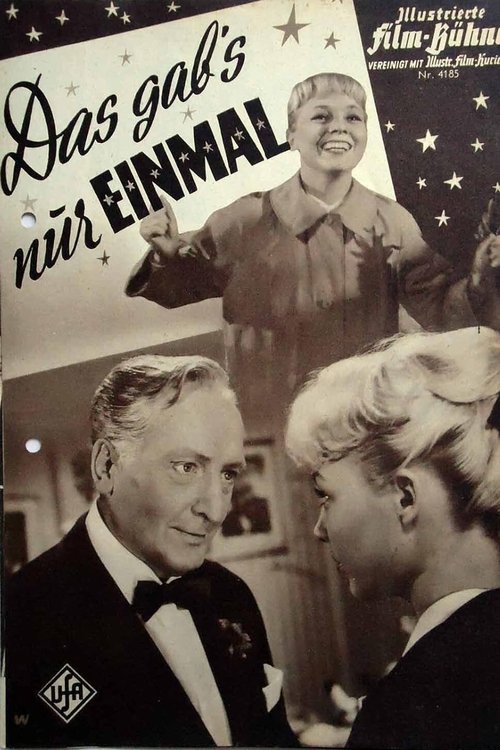
It Only Happened Once is a period-typical drama that focuses on the friction between individual ambition and traditional social hierarchies. The narrative follows a standard aspiration arc, centering on a protagonist's journey from a small town to the metropolitan center of Berlin. While the film highlights Sabine's defiance of patriarchal authority, it reinforces the conventional social and familial structures of the late 1950s. The story lacks multi-layered depth, presenting a homogeneous view of society that aligns with the cinematic conventions of its era.
Category Breakdown
The film does not depict any non-straight relationships or same-sex intimacy. The story centers on a traditional romantic engagement between Sabine and her fiancé, Jürgen.
Sabine Schröder pursues an acting career despite opposition from her father and fiancé, showing strong determination. However, her ambition is portrayed as disruptive to the established social order.
The cast reflects the homogeneous demographic norms of 1958 West German cinema. There is no indication of diverse representation or racial diversity in the narrative.
The story explores the tension between provincial tradition and urban modernity. It adheres to standard mid-century Western values regarding family stability and aspirational success in Berlin.
No characters with visible or invisible disabilities are identified in the film's documentation.
Present on Screen
Limited or Absent
Official Synopsis
Sabine Schröder, who works as a hairdresser's assistant in a small town, feels called to higher things: to acting. She gets on everyone's nerves with her madness: her boss, her parents and above all her fiancé, the car mechanic Jürgen. One day, when Schröders received a letter from a Berlin film company, the father burned it unread. Out of disappointment, anger and defiance, Sabine packs her bags and makes her way to Berlin, where the film festival is taking place.
1957
1965
1983

1961
1968

1963
1958

1986
No reviews yet. Be the first to share your thoughts on this movie!
Use the rating form above to leave a star rating and optional review.