They Caught the Ferry
1948
No user ratings available yet
Representation score: 2.7 out of 10
Representation Score
Minimal
1964
Director
Gabriel Axel
Runtime
90 minutes
Average Rating
No ratings yetNew Showbiz Analysis
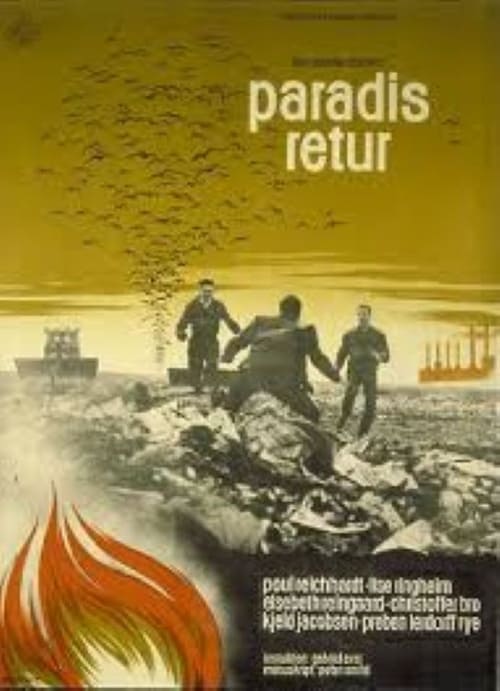
Paradise and Back is a period drama that closely follows the social and demographic norms of 1928 Denmark. The plot revolves around a localized struggle for class mobility and individual stability, centered on a male protagonist's desire to escape a landfill environment. The film lacks complexity in representing multiple aspects of identity, presenting a conventional romantic encounter rather than a critique of broader societal issues. While the female lead displays a hint of modern mobility, the overall structure remains traditional and specific to the demographics of the time.
Category Breakdown
The story follows a traditional romantic storyline between a male protagonist and a female interest. There is no depiction of non-straight or non-cisgender identities, nor does it challenge the idea that everyone is assumed to be straight or cisgender.
While the female character shows some independence through her red sports car, the narrative remains focused on the male protagonist's journey to find his purpose.
Set in 1928 Copenhagen, the film seems to reflect the demographic uniformity of early 20th-century Denmark. There is no indication of diverse racial or ethnic casting.
The drama centers on class-based themes of escapism and environmental struggle. It does not address secularism or the questioning of traditional values.
The narrative does not provide any information about characters with visible or invisible disabilities.
Present on Screen
Limited or Absent
Official Synopsis
Tonnemann lives in one of the wooden sheds at the far end of Islands Brygge, close to Copenhagen's landfill site. But in 1928, he wants to leave this environment behind – to go where the air is fresh and life may offer both security and meaning. He is already on his way with his packed suitcase to sign on to a long-distance boat when a lovely girl gets in his way with her little red sports car.
1948

1957
1967
1987
1999

2009

1948

1961
No reviews yet. Be the first to share your thoughts on this movie!
Use the rating form above to leave a star rating and optional review.