Christina
1953
No user ratings available yet
Representation score: 2.4 out of 10
Representation Score
Minimal
1956
Director
Josef von Báky
Runtime
104 minutes
Average Rating
No ratings yetNew Showbiz Analysis
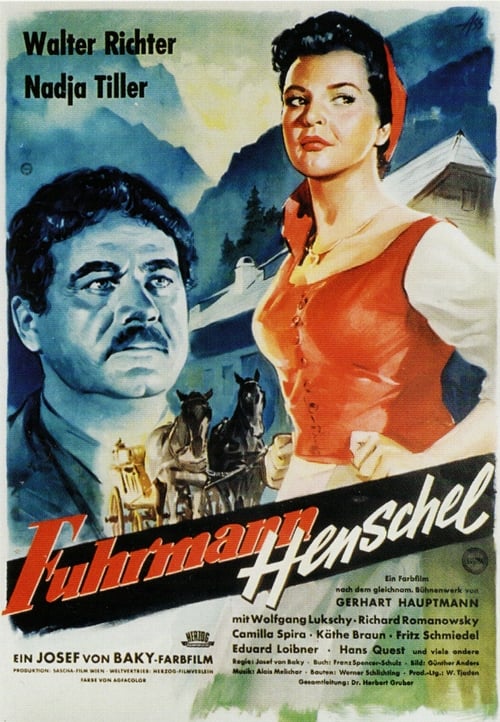
Fuhrmann Henschel is a traditional mid-century drama that adheres strictly to the social and moral hierarchies of its era. The narrative relies on established archetypes to drive a story of temptation and moral consequence. The film reinforces conventional Western structures rather than challenging them. It centers on a male protagonist's control and uses female characters to trigger emotional conflict through traditional domestic roles. Ultimately, the work functions as a period piece that reflects the homogeneous and conservative cinematic norms of 1950s Europe.
Category Breakdown
The film centers on a traditional heterosexual relationship and does not include any non-cisgender identities or critiques of heterosexuality.
The story follows traditional mid-century gender roles where the male protagonist holds central control. Female characters are limited to archetypes of the virtuous wife or the deceitful temptress.
The narrative appears to be a localized European drama reflecting the homogeneous demographic norms of 1950s German-language cinema. It centers on a traditional Western social structure.
The plot aligns with classical moralistic storytelling regarding marital fidelity and personal oaths. It lacks themes that challenge religious or institutional social structures.
A sick wife is mentioned, but it is unclear if her illness provides real control over the plot. It may simply serve as a plot device to facilitate the protagonist's transition.
Present on Screen
Limited or Absent
Official Synopsis
The simple and good-natured coachman Henschel has a sick wife and a deceitful maid who looks after the household. The wife makes him promise never to marry the maid. But after his wife's death, Henschel succumbs to the temptation of the maid.
1953
1953
1975
1958
1945
1956

1951

1938
No reviews yet. Be the first to share your thoughts on this movie!
Use the rating form above to leave a star rating and optional review.