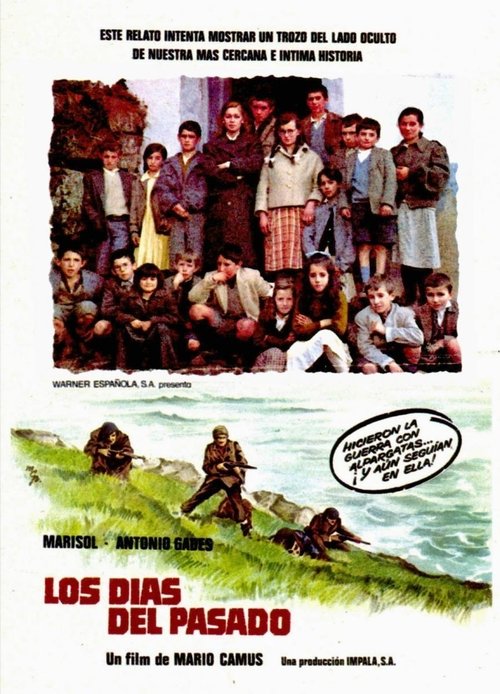
Los días del pasado
1977
No user ratings available yet
Diversity score: 5.0 out of 10

1982
Director
Francesc Betriu
Runtime
111 minutes
Average Rating
No ratings yetSynopsis
Colometa is an average housewife with two children to care for in the late 1930's, as the Spanish Civil War is starting and her husband goes off to fight. She had been an ordinary woman working in a shop when she met the lively carpenter who married her, and their life together was without major problems. But now she is forced to raise her children under straitened circumstances, and after her husband dies, her life undergoes another major change as she marries for the second time. Underneath Colometa's acquiescent, forebearing exterior must lie just a few discontents, a few unrealized dreams - but they never surface as she blithely moves from one episode in her life to another.
Overall Score
Fair
Category Breakdown
LGBTQ+ Representation
The film lacks explicit LGBTQ+ characters or non-heteronormative identities. It focuses strictly on the protagonist's heterosexual domestic experiences and traditional familial structures.
Gender Representation
The narrative centers on female subjectivity, disrupting masculine-led war stories by focusing on the psychological toll of conflict on women. It validates the female experience as a central historical force.
Racial & Ethnic Diversity
Casting is deeply rooted in the specific regional identity of Catalonia. While it lacks modern globalized diversity, it maintains high authenticity to its specific working-class cultural setting.
Religious & Cultural Diversity
The film critiques working-class hardships during political upheaval. It avoids idealized religious morality, instead presenting a fractured society where survival takes precedence over traditional notions of patriotism.
Disability Representation
There is no significant focus on visible or invisible disabilities. The characters' struggles are primarily socioeconomic and psychological rather than centered on physical or mental impairments.
Strengths
Areas for Improvement
AI Analysis
La plaça del Diamant succeeds as a sophisticated character study that elevates the domestic, female perspective. By centering on Colometa, the film subverts traditional war narratives to explore the internal lives of women navigating systemic instability. However, the film is limited by its narrow focus on the specific historical and regional context of Catalonia. It lacks representation for LGBTQ+ identities and does not address disability or broader racial diversity. Ultimately, the film's strength lies in its nuanced portrayal of the working class and its refusal to offer a sanitized, heroic view of history, opting instead for psychological depth.
1977

1948

1980

1984
1943

2016
2006
1980

1958
2008
1953

1976
No reviews yet. Be the first to share your thoughts on this movie!
Use the rating form above to leave a star rating and optional review.