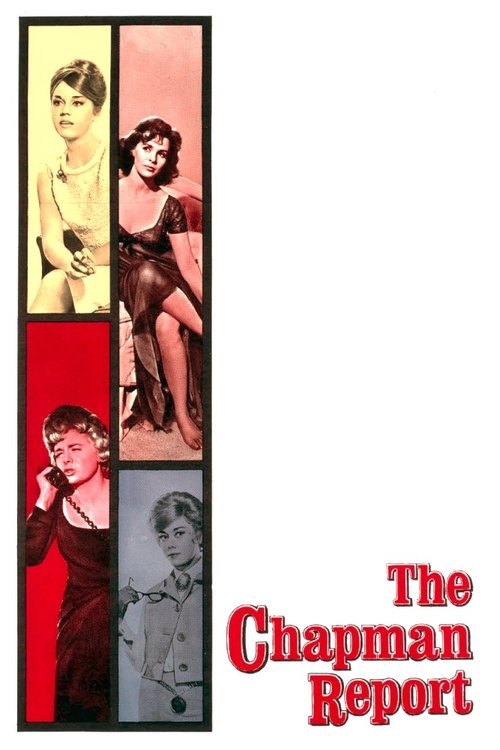
The Chapman Report
1962
No user ratings available yet
Representation score: 3.5 out of 10

Representation Score
Minimal
1959
ApprovedDirector
Jean Negulesco
Runtime
121 minutes
Average Rating
No ratings yetNew Showbiz Analysis
The film presents a period-specific melodrama that highlights the professional lives of women. While it offers more opportunities for women compared to many films of its time, it remains limited by the social and demographic homogeneity of the late 1950s. Its focus on career paths provides a progressive angle for the era, but it does not include diverse racial, ethnic, or LGBTQ+ identities. The production adheres closely to the social hierarchies of mid-century Hollywood.
Category Breakdown
The film follows a storyline where all characters are assumed to be straight and cisgender. It does not include any non-traditional gender identities or same-sex relationships.
The story focuses on women's professional ambitions and their ability to drive the narrative despite facing male-dominated environments.
The cast is primarily white, reflecting the homogeneous society of 1950s Madison Avenue. The film does not engage with perspectives outside Anglo-Saxon backgrounds.
The film portrays the pursuit of professional success within the context of mid-century Western values. It upholds traditional social orders without challenging established institutions.
There is no representation of physical, sensory, or neurodivergent disabilities. Characters are shown through a lens of typical physical abilities.
Present on Screen
Limited or Absent
Official Synopsis
An exposé of the lives and loves of Madison Avenue working girls and their higher-ups.
1962
1945
1945

1956
1955
1958
1979
1965
No reviews yet. Be the first to share your thoughts on this movie!
Use the rating form above to leave a star rating and optional review.