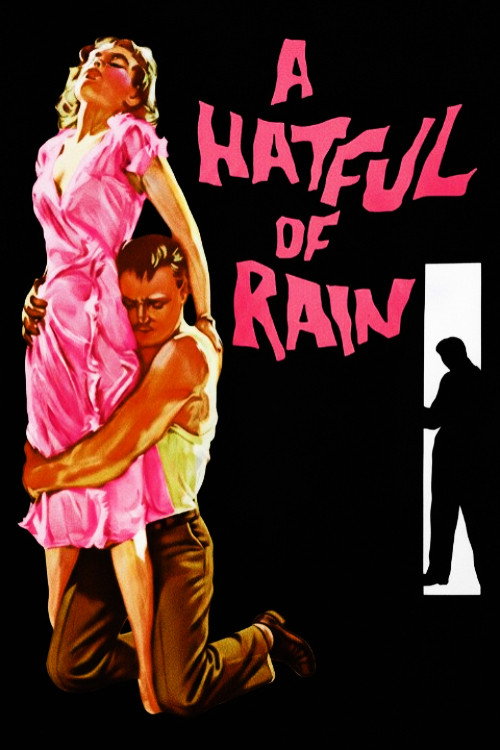
A Hatful of Rain
1957
No user ratings available yet
Representation score: 3.9 out of 10
Representation Score
Limited
1957
NRDirector
André de Toth
Runtime
94 minutes
Average Rating
No ratings yetNew Showbiz Analysis
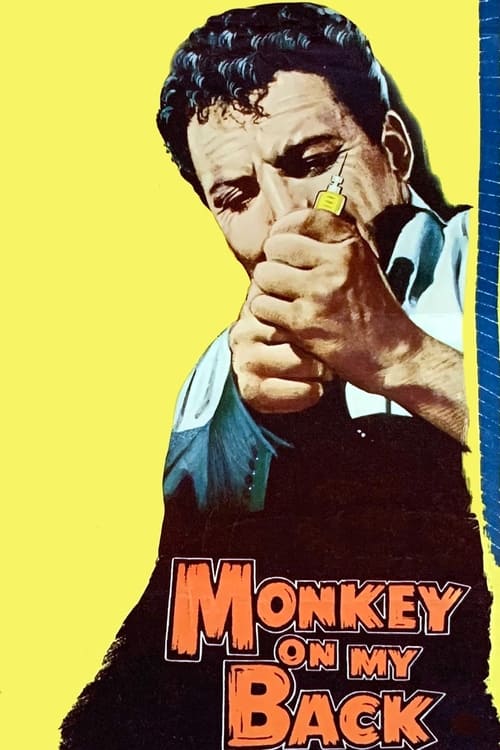
Monkey on My Back is a gritty character study that prioritizes psychological realism over social diversity. It disrupts the era's simplistic moral views by vividly depicting a hero's descent into addiction. However, the film remains firmly rooted in mid-century social structures. The narrative is almost entirely focused on male experiences, and the casting reflects the homogeneous norms of 1950s Hollywood. While the film offers a raw look at chemical dependency, it lacks depth in addressing multiple aspects of identity. It focuses on individual tragedy rather than broader social critiques.
Category Breakdown
The film focuses on the life of Barney Ross and includes no representation of LGBTQ+ identities or stories that challenge the assumption that everyone is straight or cisgender.
The story centers around male experiences of combat and addiction. Female characters play supporting roles without having much influence over the plot.
The film has a mostly white cast, typical of 1950s casting practices. There is no significant representation of non-white individuals or multi-layered depth.
The film explores the breakdown of the hero archetype through drug dependency. It shows the vulnerability of traditional institutions like the military.
The movie portrays the hidden disability of addiction and malaria. However, it focuses more on the struggle cliché rather than empowerment.
Present on Screen
Limited or Absent
Official Synopsis
The painfully true story of welterweight boxing champion Barney Ross is detailed in Monkey on My Back. Cameron Mitchell stars as Ross, whose meteoric ring career is interrupted when he joins the Marines at the outset of WWII. A highly decorated hero, Ross contracts malaria oversees and is given morphine to assuage the pain. By the time he returns to the states, Ross is a confirmed drug addict. Before he can rise to the top again, he must hit rock bottom and his descent into the hell of narcotics dependency is graphically illustrated (so much so that the film was almost denied a Production Code seal). Though a cured Barney Ross served as technical advisor for Monkey on My Back, he ended up suing the producers for defamation of character -- and lost.
1957
1947

1982
1955

1949
1956
1951

2019
No reviews yet. Be the first to share your thoughts on this movie!
Use the rating form above to leave a star rating and optional review.