Creeps
1956
No user ratings available yet
Representation score: 0.5 out of 10
Representation Score
Minimal
1949
ApprovedDirector
Jules White
Runtime
16 minutes
Average Rating
No ratings yetNew Showbiz Analysis
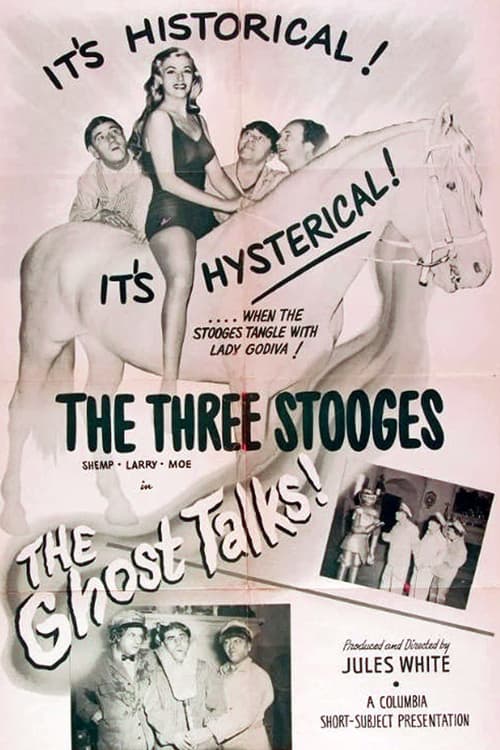
The Ghost Talks is a product of its time, emphasizing fast-paced slapstick humor over complex or diverse character development. The narrative leans heavily on mid-century comedic clichés and traditional archetypes. Representation is limited, adhering to the demographic and social hierarchies common in 1940s studio shorts. The focus remains on physical gags rather than exploring diverse identities.
Category Breakdown
The film does not include any LGBTQ+ narratives or representations of non-cisgender identities. Instead, it focuses on supernatural and mythological themes.
Women are portrayed in peripheral roles, often fitting the mythological archetype of Lady Godiva. The story is driven by male characters, reinforcing traditional comedic dynamics.
The cast appears to be uniformly white, typical of films produced in the late 1940s. There are no non-white characters or racially diverse representation.
The film uses Gothic and folklore elements like Lady Godiva for comedic purposes. It follows a standard escapist comedy format without challenging Western cultural norms.
There are no characters with visible or invisible disabilities. Physical mishaps occur during slapstick humor, but there is no meaningful portrayal of disability.
Present on Screen
Limited or Absent
Official Synopsis
The stooges are movers for an express company and on a rainy night are sent to move some junk, including a suit of armor, from a spooky old house. The armor is haunted by the ghost of Peeping Tom, who has no intention of leaving. The ghost foils the stooges attempts to take the armor, until Lady Godiva shows up and the two ride off together.
1956
1937
1941
1955

1957
1948
1949
1951
No reviews yet. Be the first to share your thoughts on this movie!
Use the rating form above to leave a star rating and optional review.