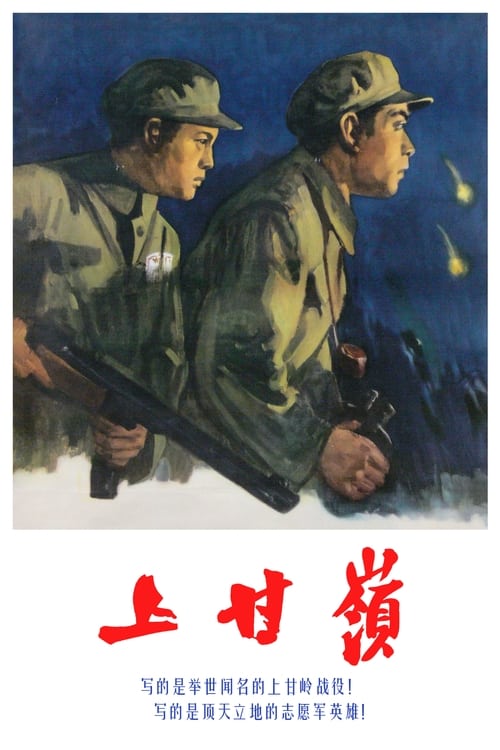
Battle on Shangganling Mountain
1956
No user ratings available yet
Representation score: 4.1 out of 10
Representation Score
Limited
1975
Director
Ting Shan-Hsi
Runtime
112 minutes
Average Rating
No ratings yetNew Showbiz Analysis
Eight Hundred Heroes is a traditional historical war drama centered on the defense of the Sihang warehouse. The narrative emphasizes themes of collective sacrifice, duty, and nationalistic mobilization during the Battle of Shanghai. While the film avoids complex identity politics, it offers significant roles for women through the girl scouts. This breaks the stereotype of total female passivity, even though the military structure remains male-dominated. The film portrays a meaningful struggle for ethnic sovereignty and resistance against external forces. It adheres to conventional depictions of heroism and patriotic duty without exploring diverse social identities.
Category Breakdown
The film does not include any characters with non-binary gender identities or sexual orientations. The story focuses solely on military operations and logistics.
Women play important roles through the girl scouts who take risks to deliver supplies. However, the main leadership and combat roles are held by men.
The story centers on Chinese defenders fighting against Japanese forces. The cast is ethnically uniform, emphasizing the struggle of an ethnic group for sovereignty.
The film upholds traditional values of patriotism and loyalty to the state. It highlights nationalistic heroism and the defense of territory without challenging cultural institutions.
There are no characters with visible or invisible disabilities in the narrative.
Present on Screen
Limited or Absent
Official Synopsis
As battle rages in Shanghai, a single battalion of soldiers led by Xie Jinyuan is ordered to hold back the Japanese forces at the Sihang warehouse. Girl scouts risk their lives to deliver food and medicine to the defenders.
1956
1961
2021
1959

2020
1965

2020
1963
No reviews yet. Be the first to share your thoughts on this movie!
Use the rating form above to leave a star rating and optional review.