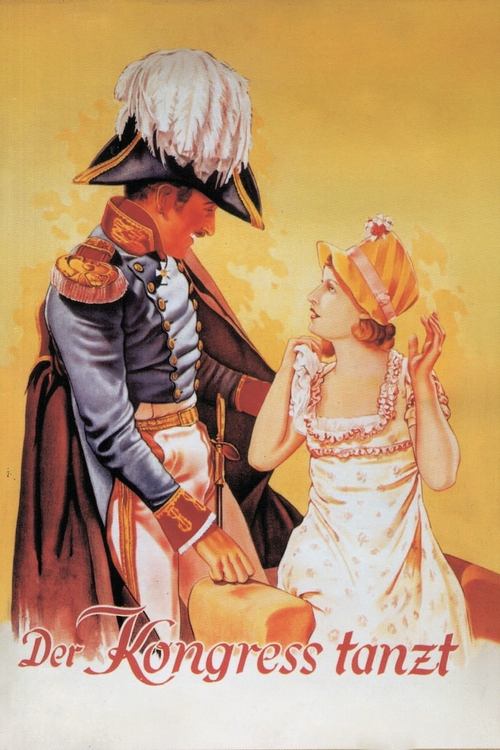
Congress Dances
1931
No user ratings available yet
Representation score: 0.4 out of 10
Representation Score
Limited
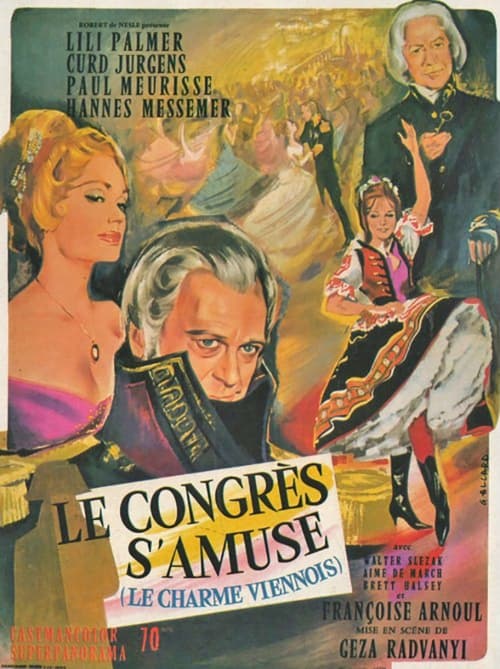
1966
PGDirector
Géza von Radványi
Runtime
96 minutes
Average Rating
No ratings yetNew Showbiz Analysis
Congress of Love functions as a lighthearted historical comedy that uses a temporal displacement cliché to bridge 1965 and 1814. While it lacks progressive identity politics or multi-layered casting, it avoids being a reverent portrait of history. The film's strength lies in its subtle deconstruction of the 'Great Man' theory. By emphasizing the social hedonism and frivolity of the aristocracy, it undermines the perceived sanctity of traditional political institutions. Ultimately, the film is a product of its era, focusing on a homogeneous European cast and patriarchal power structures. It provides a cynical view of historical power dynamics rather than a diverse one.
Category Breakdown
The film does not include any LGBTQ+ identities or narratives. It follows the traditional social structures of both the 1814 setting and the 1960s production era.
The plot focuses on male-dominated political hierarchies, centered around figures like Metternich and Talleyrand. While female characters are mentioned in ballroom settings, the main roles remain with male leaders.
The setting reflects a largely homogeneous European population consistent with the historical Congress. There is no indication of non-European perspectives or diverse casting.
The narrative offers a moderate critique of Western institutions by portraying statesmen as cynical manipulators. It suggests European foundations were built on self-interest rather than pure idealism.
There is no evidence that disability or neurodivergence are central to the narrative. No characters are defined by these traits within the provided context.
Present on Screen
Limited or Absent
Official Synopsis
Vienna 1965. While visiting the Wax Museum a group of tourists stop in front of the figure of Prince Metternich. All of a sudden they find themselves brought back 150 years earlier during the Vienna Congress of 1814-1815. Before their eyes wide open, history is in the making. Gathered around the Tsar of Russia, Alexander I, the Kings of Bavaria, Würtemberg, Prussia and Denmark, are persuaded they are building the future Europe whereas they are being manipulated by foxy Chancellor Metternich, he himself under the thumb of cynical Count Talleyrand, the French representative. All those considerations come second though to partying and social life, which is all these aristocrats really want out of this congress.
1931
1971
1969
1984
1968

1990
1965
1960
No reviews yet. Be the first to share your thoughts on this movie!
Use the rating form above to leave a star rating and optional review.