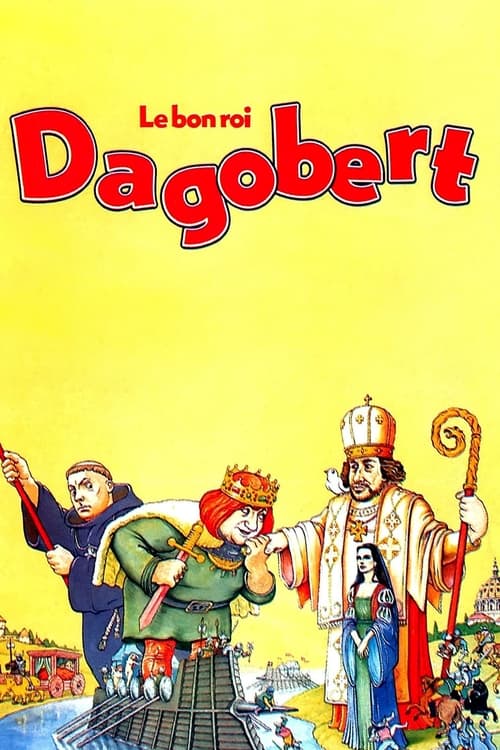
Good King Dagobert
1984
No user ratings available yet
Representation score: 4.5 out of 10
Representation Score
Limited
1963
Director
Pierre Chevalier
Runtime
95 minutes
Average Rating
No ratings yetNew Showbiz Analysis
Good King Dagobert uses a child's irreverent imagination to reimagine Merovingian history. While the film challenges the seriousness of historical and religious institutions through anachronism, it remains rooted in traditional comedic clichés. The narrative lacks intentionality regarding diverse representation. It relies on classical structures that do not actively empower underrepresented identities or provide ability to act to women and non-white characters. Ultimately, the film functions as a whimsical deconstruction of authority rather than a progressive exploration of diverse identities.
Category Breakdown
The film centers on a king with eight wives and a harem, focusing on comedic excess rather than queer identity or empowerment.
Women appear primarily as part of a harem cliché, positioning them as passive elements within a patriarchal structure.
The Merovingian setting focuses on Western European identities. There is no evidence of racial blending or non-white characters.
The film disrupts religious sanctity through a child's irreverent lens. Archbishop Eloi is reimagined as an inventor rather than a spiritual figure.
The narrative contains no mention of characters with visible or invisible disabilities.
Present on Screen
Limited or Absent
Official Synopsis
Mr. Pelletan's rascal son Bébert son got another F for playing in class. His punishment is an essay on the Merovingian king Dagobert. All they know is he had eight wives and reunited Francia. The ignorant knave's irreverent imagination turns that into a harem and a ludicrous war without armies, loaded with anachronisms, in a race against rival king Charibert for the crown of Reims. The king's right hand, archbishop Eloi, the later patrons saint of carpentry, is portrayed as an inventor.
1984
1971
1977

1964
1988
1973
1984
1955
No reviews yet. Be the first to share your thoughts on this movie!
Use the rating form above to leave a star rating and optional review.