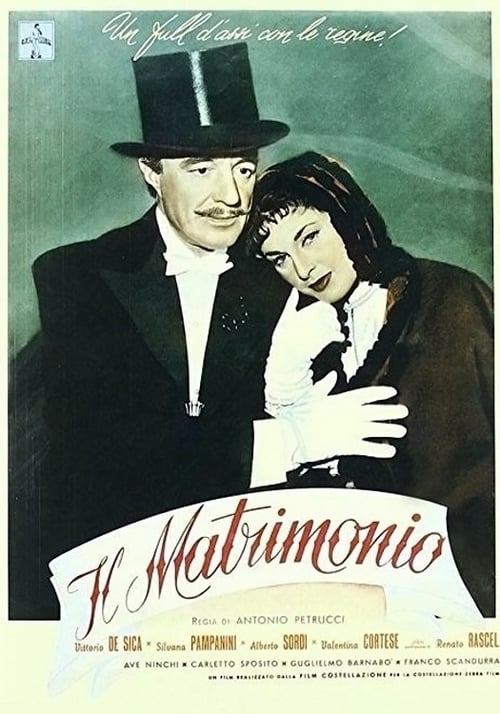
Il matrimonio
1954
No user ratings available yet
Representation score: 3.1 out of 10

Representation Score
Limited
1952
ApprovedDirector
Alessandro Blasetti
Runtime
122 minutes
Average Rating
No ratings yetNew Showbiz Analysis
Times Gone By functions as a period-piece retrospective, prioritizing the preservation of 19th-century Italian literary traditions. Because the anthology is rooted in historical source material, the narrative structure naturally aligns with the social norms and hierarchies of that era. The film emphasizes technical mastery and cultural heritage rather than the subversion of social structures. It lacks the intentionality required to meet modern standards of diversity, focusing instead on a traditionalist approach to storytelling. Ultimately, the film acts as a window into a specific historical aesthetic, which limits its scope regarding contemporary diversity and representation.
Category Breakdown
The film relies on 19th-century literary adaptations that don't show any non-binary gender identities. There is no visible queer ability to act present in these period segments.
The narratives likely reflect traditional 19th-century gender roles. The film appears to adhere to conventional depictions of femininity and masculine leadership common in mid-century period dramas.
The focus on Italian literary traditions suggests a homogeneous cast centered on European identities. There is no indication of diverse ethnic representation or race-bent casting.
The work serves as a celebration of national literary heritage. It prioritizes the preservation of traditional cultural aesthetics over modern institutional critiques.
There is no confirmed information regarding the portrayal of physical disabilities or neurodivergence within these historical segments.
Present on Screen
Limited or Absent
Official Synopsis
A number of different segments taken from 19th century Italian stories.
1954
1972
1965

1971

1936

1964

1966
1966
No reviews yet. Be the first to share your thoughts on this movie!
Use the rating form above to leave a star rating and optional review.