
In Those Days
1947
No user ratings available yet
Diversity score: 2.5 out of 10
1960
Director
Edgar Neville
Runtime
91 minutes
Average Rating
No ratings yetSynopsis
Life events around a city street and its residents are told along the years while time goes by, wars break out and end and life evolves.
Overall Score
Limited
Category Breakdown
LGBTQ+ Representation
The film focuses on traditional domestic and communal structures. It lacks depictions of non-cisnormative identities or same-sex intimacy, operating strictly within the heteronormative social parameters of 1960s Spain.
Gender Representation
Gender roles align with the era's hierarchies. Women are primarily positioned within the private domestic sphere, while men occupy public, authoritative roles, reinforcing traditional social structures.
Racial & Ethnic Diversity
The cast reflects the demographic homogeneity of a mid-century Spanish urban center. It features a Mediterranean-white cast that mirrors the historical reality of the location without challenging demographic norms.
Religious & Cultural Diversity
The narrative is deeply rooted in the religious and cultural milieu of its time. It emphasizes communal coexistence and social order rather than offering anti-religious or anti-capitalist critiques.
Disability Representation
The film provides a broad cross-section of human experience but lacks characters with visible or invisible disabilities as central plot agents. Focus remains on social and economic roles.
Strengths
Areas for Improvement
AI Analysis
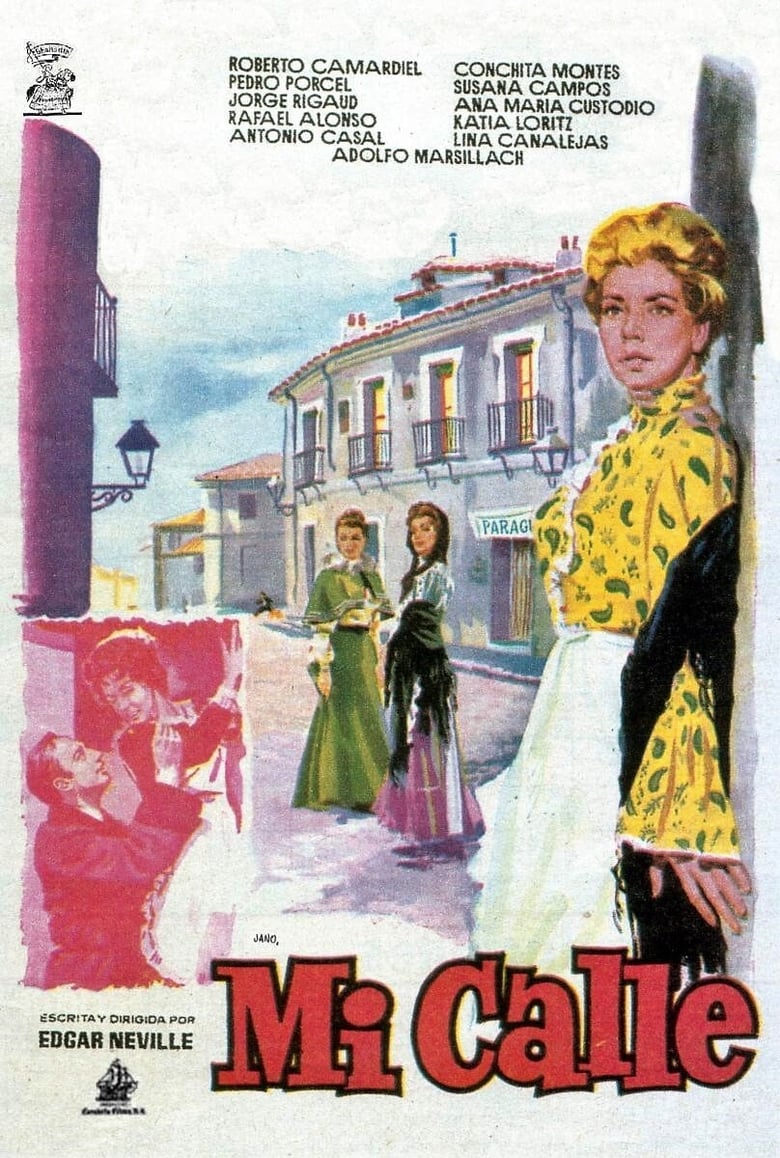
Edgar Neville’s *Mi calle* serves as a lyrical chronicle of urban life in mid-century Madrid. It succeeds as a humanistic study of community bonds and the cyclical nature of neighborhood existence, capturing the essence of a specific socio-cultural ecosystem. However, the film functions primarily to reinforce rather than subvert established social hierarchies. It adheres strictly to the traditional gender, racial, and cultural norms of 1960s Spain, offering a portrait of stability rather than progressive disruption. Ultimately, while the film is a poignant observation of interconnectedness, it lacks the intentional representation of marginalized identities required for a higher diversity rating.
1947
1962
2003
1946
1955

2006
1963
1976
1956

1994
1961

1951
No reviews yet. Be the first to share your thoughts on this movie!
Use the rating form above to leave a star rating and optional review.