
From the Edge of the City
1998
No user ratings available yet
Representation score: 6.9 out of 10
Representation Score
Limited
1961
Director
Alekos Alexandrakis
Runtime
95 minutes
Average Rating
No ratings yetNew Showbiz Analysis
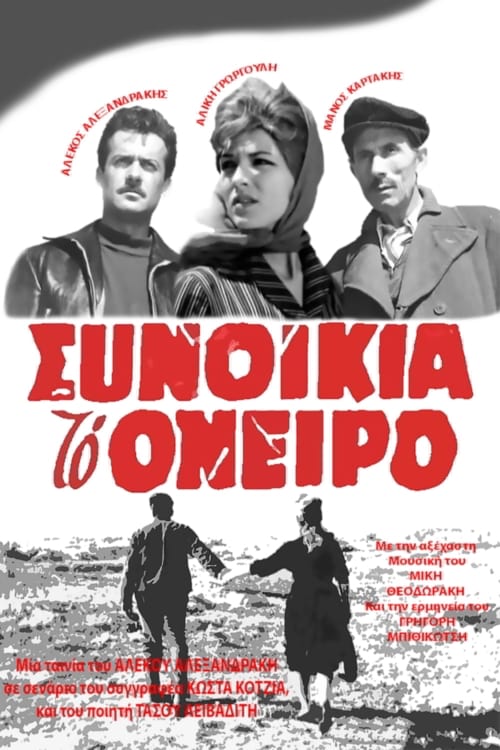
Synoikia to Oneiro serves as a period-specific social drama that emphasizes social realism over escapism. Although it lacks modern characters who reflect more than one aspect of diversity, it provides a meaningful glimpse into the lives of the urban working class and the systemic nature of poverty. The film's strength lies in its critique of the stability of the traditional family unit and the shortcomings of individualistic capitalist pursuits. It replaces the idea of prosperity with a raw depiction of economic hardship. However, the narrative remains confined by the social hierarchies of 1960s Greek cinema. The focus on male disappointment and the limited influence of women reflect traditional patriarchal structures.
Category Breakdown
The film does not include any LGBTQ+ characters or non-straight relationships. It focuses on traditional romantic pairings and heterosexual relationships between Ricos and Stefi.
Female characters like Stefi and Eleni play important roles in the emotional storyline, but their influence is limited by socioeconomic hardships. The plot centers on the downfall of male characters, which reinforces traditional patriarchal structures.
Set in the Asyrmatos neighborhood of Athens, the film portrays a culturally uniform Greek population. There is no indication of multi-ethnic casting or non-European identities.
The film offers a progressive look at class struggle and systemic poverty. It moves away from idealized domestic life to highlight the harsh realities of economic hardship.
There is no documented evidence of physical or neurodivergent disabilities portrayed in this film.
Present on Screen
Limited or Absent
Official Synopsis
A poor neighborhood of Athens, Asyrmatos, is the center of the world for the people who live there and try in every way to escape from poverty and destitution. A handsome released youth, Ricos (Alekos Alexandrakis), is trying to make money, at the same time that his lover, Stefi (Aliki Georgoulis), is seeing other men and her father, Nekrophoras (Manos Katrakis), is trying to contribute in family finances. Rico will set up a job, but will spend the money raised before he can put it into action. As a result, one of his "partners" (Alekos Petsos) will commit suicide, leaving his pregnant wife, Eleni (Aleka Paizis), to her fate. Rikos, his beloved and her father, defeated and disappointed because of the expectations that were never fulfilled, will be forced to come to terms with the harsh reality.
1998

1970

1955
1967
1963
1986
1967

1963
No reviews yet. Be the first to share your thoughts on this movie!
Use the rating form above to leave a star rating and optional review.