Portrait of Alison
1955
No user ratings available yet
Representation score: 1.1 out of 10
Representation Score
Minimal
1956
Not RatedDirector
Guy Green
Runtime
97 minutes
Average Rating
No ratings yetNew Showbiz Analysis
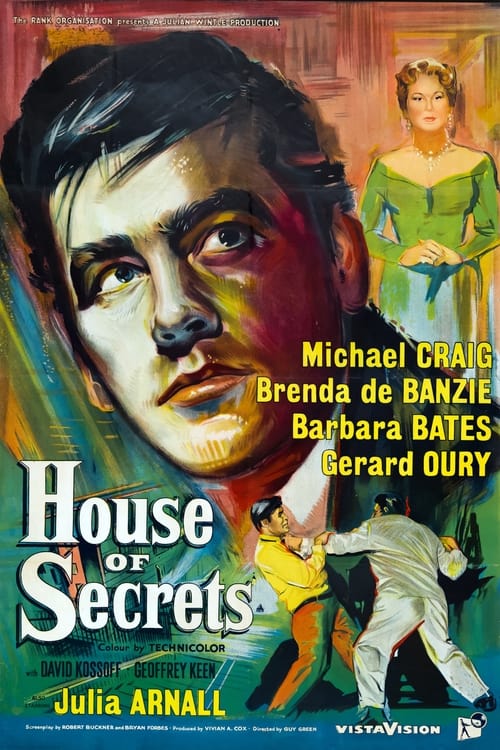
House of Secrets is a conventional mid-century crime drama that operates strictly within the social and cinematic norms of 1956. The story prioritizes a masculine-coded espionage plot, leaving little room for diverse perspectives or identity-driven narratives. The film reinforces established hierarchies through its focus on law enforcement and Eurocentric settings. It lacks engagement with characters who reflect more than one aspect of diversity, functioning instead as a traditional genre piece that upholds the status quo of its time.
Category Breakdown
The film focuses on a crime-driven plot involving undercover police work. There is no indication of non-straight or non-cisgender identities or same-sex relationships, reflecting the constraints of 1950s heterosexual norms.
The narrative centers on a male protagonist and a male-dominated professional environment. This emphasis on masculine roles reinforces traditional gender hierarchies.
Set in Paris with an English officer, the film reflects Eurocentric perspectives common to cq1950s crime dramas. It maintains the homogeneous casting standards of its era.
The plot follows a traditional crime-and-punishment trajectory that supports institutional stability. It lacks themes that challenge Western social structures or established legal institutions.
The available information provides no mention of characters with visible or invisible disabilities. No assessment can be made regarding the portrayal of physical or neurodivergent impairments.
Present on Screen
Limited or Absent
Official Synopsis
Police in Paris recruit an English ship's officer (Michael Craig) to help trap counterfeiters by joining them.
1955

1950
1963

1971
1948

1972

1960

1949
No reviews yet. Be the first to share your thoughts on this movie!
Use the rating form above to leave a star rating and optional review.