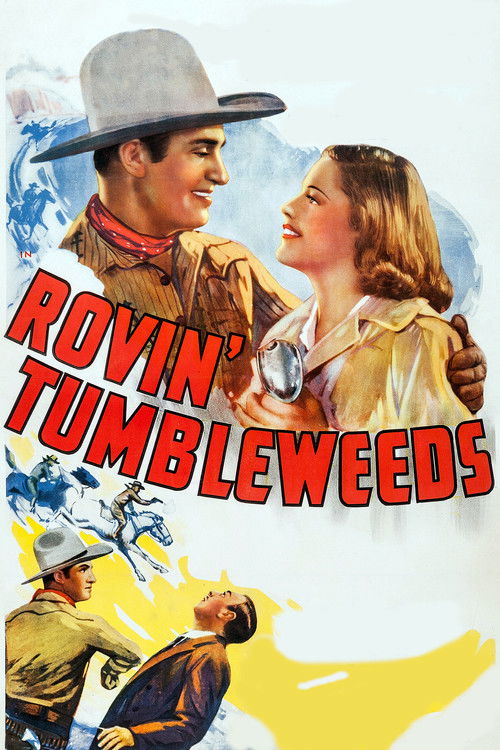
Rovin' Tumbleweeds
1939
No user ratings available yet
Diversity score: 1.8 out of 10
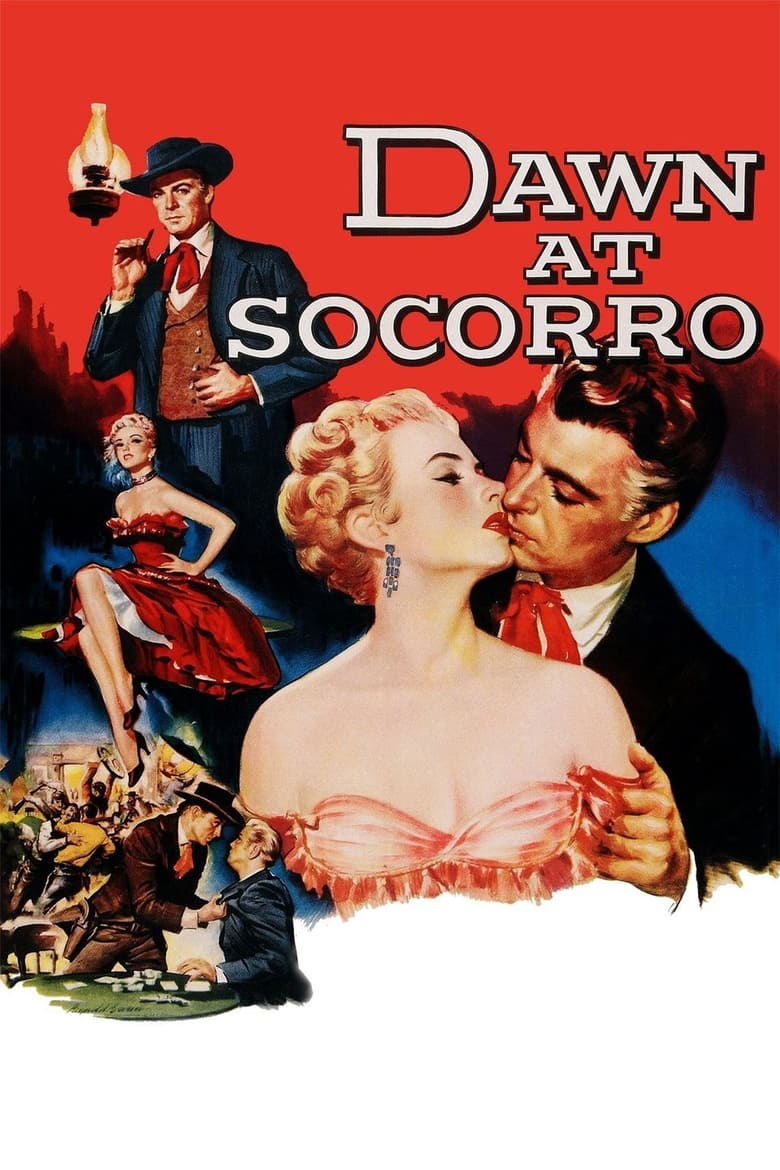
1954
NRDirector
George Sherman
Runtime
81 minutes
Average Rating
No ratings yetSynopsis
Brett Wade, gambler, gunslinger, and classical pianist, is wounded in a gunfight with the Ferris clan; the doctor finds signs of tuberculosis. En route to Colorado for his health, Brett stops in Socorro, New Mexico along with Ferris gunfighter Jimmy Rapp. Sheriff Couthen fears another shootout, but what Brett has in mind is saving waif-with-a-past Rannah Hayes from a life as one of Dick Braden's saloon girls.
Overall Score
Limited
Category Breakdown
LGBTQ+ Representation
The film contains no visible or implied LGBTQ+ characters. It presents a social landscape through a traditional lens without any queer subtext or identity-driven arcs.
Gender Representation
Narrative agency is heavily centered on male characters driving the plot through conflict. Female characters like Rannah Hayes are defined by vulnerability and a need to be saved.
Racial & Ethnic Diversity
The cast primarily features white protagonists, reflecting standard Western tropes of the era. Native American presence serves as a backdrop rather than providing characters with complex agency.
Religious & Cultural Diversity
The story reinforces traditional Western values like law and individual justice. It avoids moral relativism, focusing instead on the stabilization of frontier society against chaos.
Disability Representation
Tuberculosis is used as a plot device to create urgency for the protagonist's journey. The illness is a biological obstacle rather than a nuanced exploration of disability.
Strengths
Areas for Improvement
AI Analysis
Dawn at Socorro is a conventional mid-century Western that adheres strictly to the social hierarchies of 1950s studio filmmaking. The narrative focuses on masculine agency and frontier justice, reinforcing established genre tropes without critiquing systemic power dynamics. The film lacks intersectional complexity, relying on traditional hierarchies of gender, race, and morality. It functions as a reinforcement of mid-20th-century norms rather than an attempt to disrupt them. Ultimately, the production provides a stable, traditionalist narrative that mirrors the era's expectations, offering little representation for marginalized identities or non-normative perspectives.
1939
1917
1956
1930
1947
1956
1952
1914
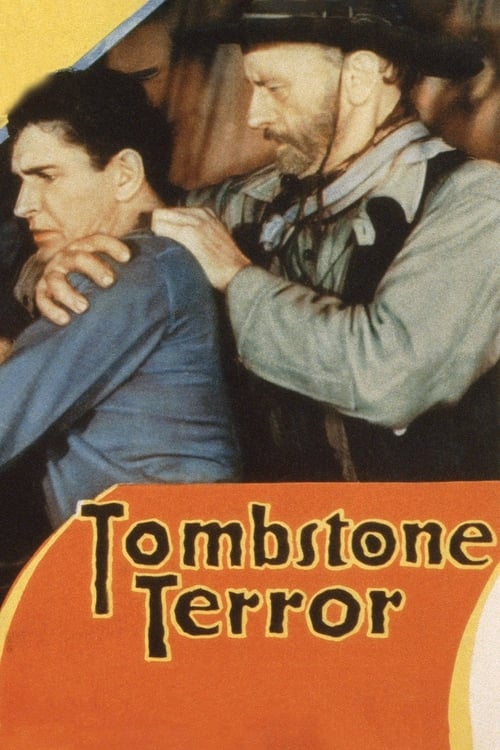
1935
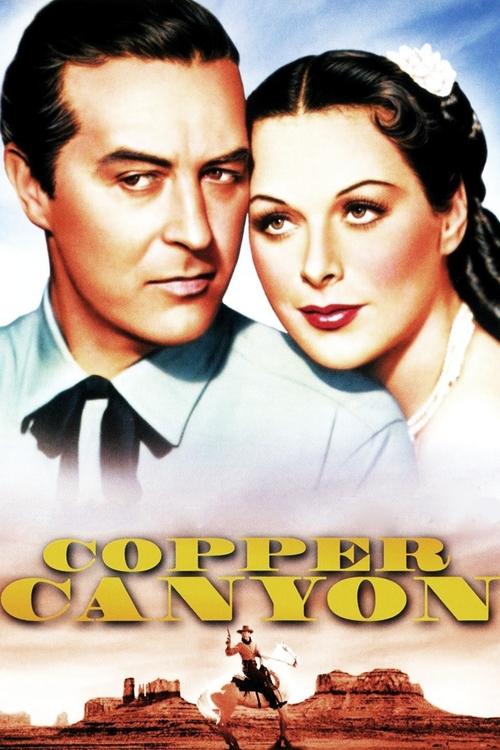
1950
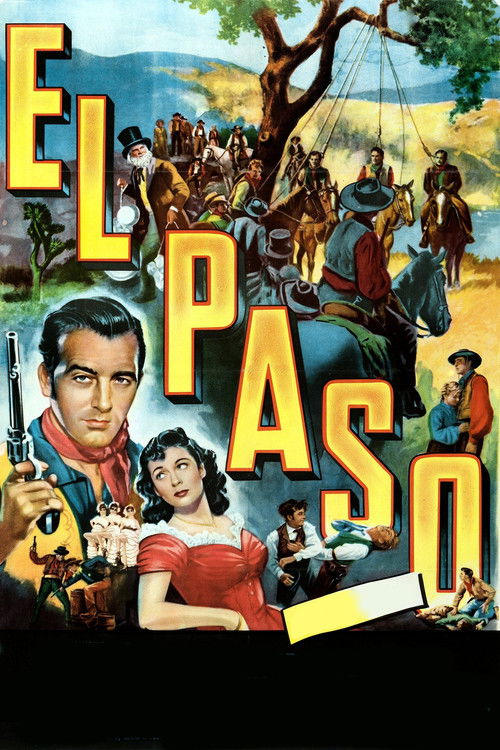
1949
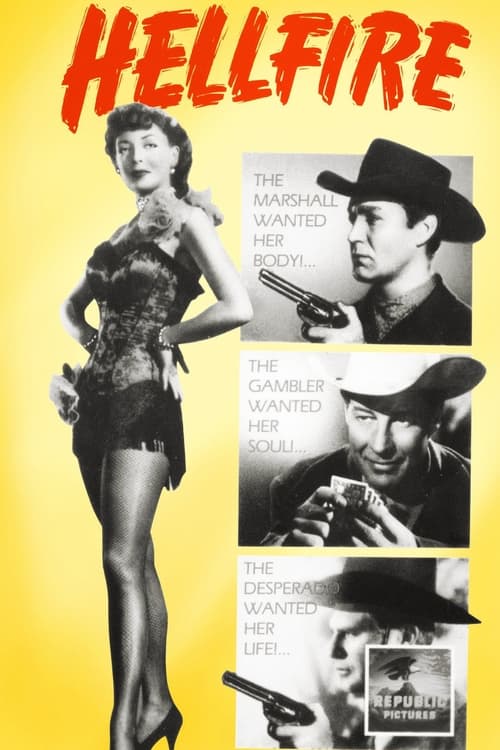
1949
No reviews yet. Be the first to share your thoughts on this movie!
Use the rating form above to leave a star rating and optional review.