The Celluloid Closet
1996
No user ratings available yet
Diversity score: 8.4 out of 10
2010
Director
Tim Wolff
Runtime
75 minutes
Average Rating
No ratings yetSynopsis
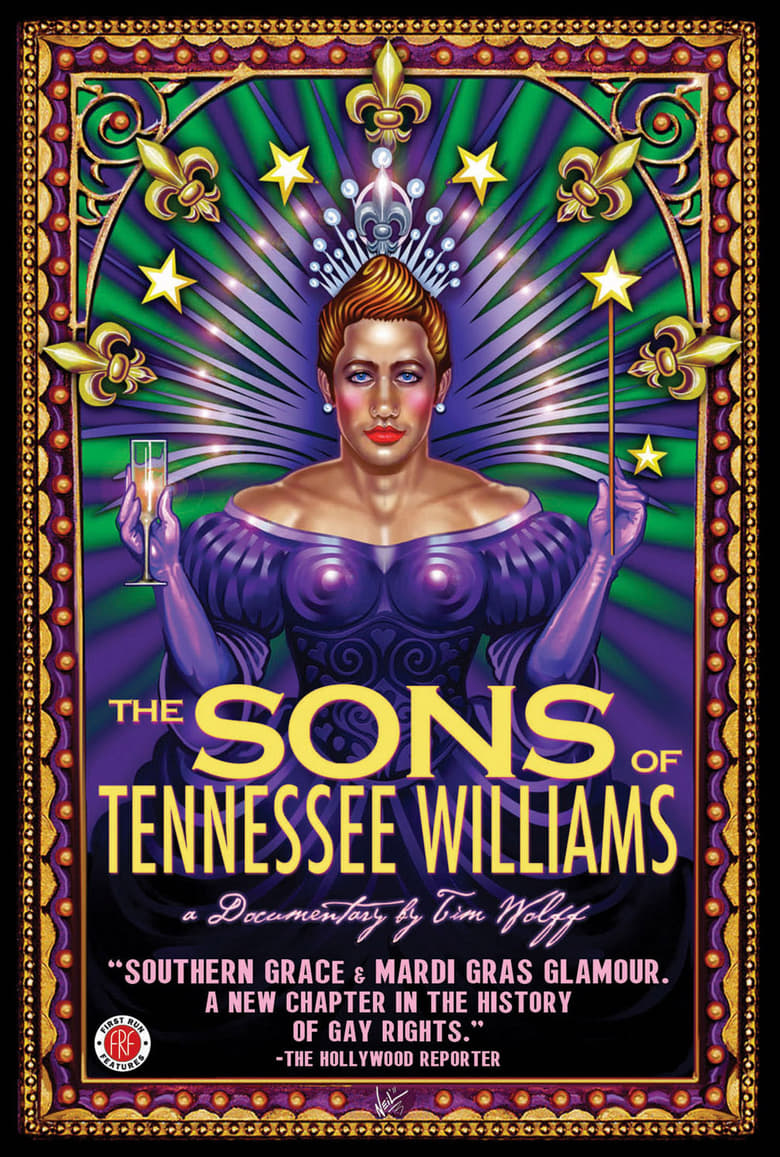
Mardi Gras, drag balls and politics – where else could these elements come together but in New Orleans? Interweaving archival footage and contemporary interviews, The Sons of Tennessee Williams charts the evolution of the gay Mardi Gras krewe scene over the decades, illuminating the ways in which its emergence was a seminal factor in the cause of gay liberation in the South.
Overall Score
Excellent
Category Breakdown
LGBTQ+ Representation
The film provides a deep study of queer life, focusing on drag culture and Mardi Gras krewes. It prioritizes the lived experiences and historical contributions of LGBTQ+ individuals in the South.
Gender Representation
The documentary highlights the subversion of traditional gender performance through drag culture. It explores gender fluidity and challenges rigid binaries often found in Southern social hierarchies.
Racial & Ethnic Diversity
The film touches upon New Orleans' multi-ethnic tapestry through its exploration of Mardi Gras. However, specific racial intersectionality remains secondary to the central queer-centric narrative.
Religious & Cultural Diversity
The film presents a critique of traditional Southern norms by framing gay krewes as a disruption of established hierarchies. It highlights cultural reclamation through local traditions.
Disability Representation
There is no significant evidence regarding the portrayal of disability within this documentary.
Strengths
Areas for Improvement
AI Analysis
The Sons of Tennessee Williams serves as a vital historical inquiry into queer agency within the American South. By repurposing the traditional krewe system, the film demonstrates how marginalized communities built spaces for visibility and political mobilization. The documentary successfully disrupts the monolith of Southern conservatism. It uses archival footage and contemporary testimony to recontextualize the region as a site of significant community-building and social evolution. While the film excels in queer and cultural representation, it maintains a narrower focus on identity through the lens of drag and Mardi Gras. This focus provides depth to the LGBTQ+ experience but leaves racial intersectionality as a secondary element.
1996

2013
1998
2019
2010
1984
2017
2012
2017
No reviews yet. Be the first to share your thoughts on this movie!
Use the rating form above to leave a star rating and optional review.