The Sons of Tennessee Williams
2010
No user ratings available yet
Representation score: 7.0 out of 10
Representation Score
Excellent
1984
UnratedDirector
Greta Schiller, Robert Rosenberg
Runtime
87 minutes
Average Rating
No ratings yetNew Showbiz Analysis
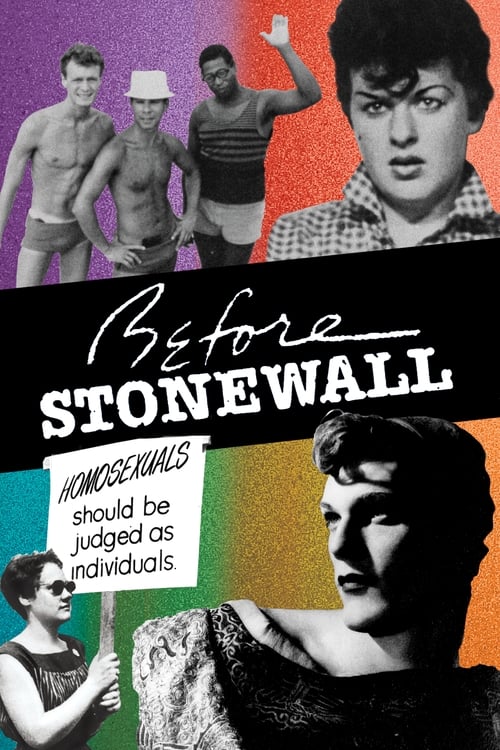
Before Stonewall is a foundational documentary that reconstructs the history of the queer community through archival film and personal recollections. It succeeds by positioning underrepresented identities at the center of the political narrative rather than as peripheral figures. The film effectively critiques traditional social hierarchies by framing resistance to state-sanctioned oppression as a social necessity. It provides deep visibility into the lived experiences of those who challenged the rigid norms of the mid-20th century. While the film excels in LGBTQ+ and cultural critique, it lacks specific depth regarding disability and certain racial intersections. These gaps are largely a reflection of the archival limitations of the period being documented.
Category Breakdown
The film serves as a vital historical record of queer liberation. It centers gay men, lesbians, and gender-nonconforming individuals as key agents of social change.
The documentary highlights the subversion of mid-20th-century gender hierarchies. It showcases individuals who actively rejected traditional masculine and feminine binaries through personal testimony and archival footage.
The film acknowledges the socioeconomic exclusion overlapping with racial identities. However, the depth of specific racial the way different parts of someone's identity overlap is somewhat limited by the archival constraints of the era.
The narrative critiques Western institutions and law enforcement as instruments of oppression. It frames the Stonewall Riots as a necessary act of political resistance against the status quo.
The documentary focuses primarily on political and social identity. There is limited specific focus on visible or invisible disabilities as a distinct category of multi-layered identity.
Present on Screen
Limited or Absent
Official Synopsis
New York City's Stonewall Inn is regarded by many as the site of gay and lesbian liberation since it was at this bar that drag queens fought back against police June 27-28, 1969. This documentary uses extensive archival film, movie clips and personal recollections to construct an audiovisual history of the gay community before the Stonewall riots.
2010
1996
2010

2019
2005
1984
1998

2017
No reviews yet. Be the first to share your thoughts on this movie!
Use the rating form above to leave a star rating and optional review.