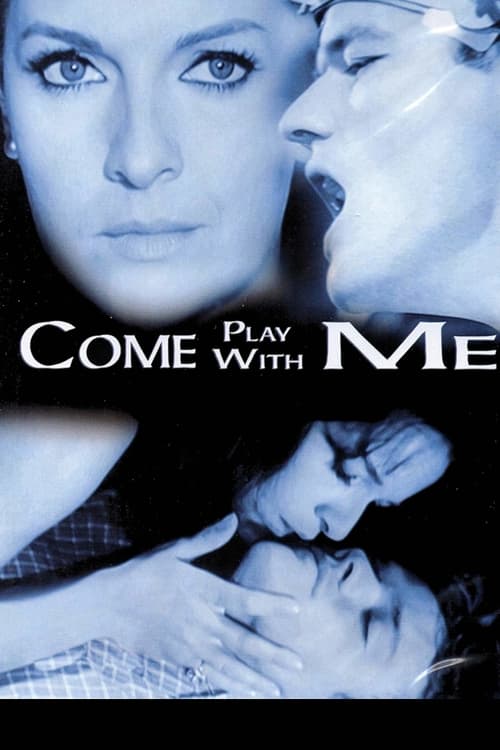
Come Play With Me
1968
No user ratings available yet
Diversity score: 4.6 out of 10

1969
TV-MADirector
Salvatore Samperi
Runtime
92 minutes
Average Rating
No ratings yetSynopsis
A mute mother stands by idly as her young children radicalise as a result of a society that thrives on conflict and manipulation. As she is drawn to a group of political activists, her absence allows her children to become increasingly extreme in their behaviour and lethal games they play.
Overall Score
Fair
Category Breakdown
LGBTQ+ Representation
The film lacks explicit evidence of non-heteronormative identities or same-sex intimacy. The narrative focus remains centered on political radicalization and the mother's engagement with activists.
Gender Representation
The story subverts the nurturing maternal archetype by framing the mother's political awakening as a destabilizing force. This disrupts traditional gender hierarchies and mid-century domestic expectations.
Racial & Ethnic Diversity
Reflecting the 1969 Italian production context, the film appears to follow a homogeneous demographic approach. There is no evidence of diverse casting or non-European representation.
Religious & Cultural Diversity
The film offers a strong critique of Western social institutions and traditional familial values. It portrays a society driven by conflict, manipulation, and ideological contagion.
Disability Representation
The protagonist's mutism is a central narrative element. However, the disability functions primarily as a plot device to drive the children's radicalization rather than exploring nuanced agency.
Strengths
Areas for Improvement
AI Analysis
Salvatore Samperi’s drama serves as a cynical deconstruction of the traditional nuclear family. By positioning the domestic sphere as a site of political contagion, the film challenges the sanctity of the home and the stability of social institutions. The work succeeds in subverting gendered expectations, moving away from the idealized mother figure toward a more complex, politically engaged character. This provides a progressive layer to the narrative architecture despite the era's limitations. However, the film remains limited by the demographic realities of 1969 Italian cinema. The lack of racial and LGBTQ+ representation, combined with the use of disability as a functional plot driver, prevents a higher diversity rating.
1968

2015

1976

1985

1979

1944
1969

1969

1969

1972

1983

1974
No reviews yet. Be the first to share your thoughts on this movie!
Use the rating form above to leave a star rating and optional review.