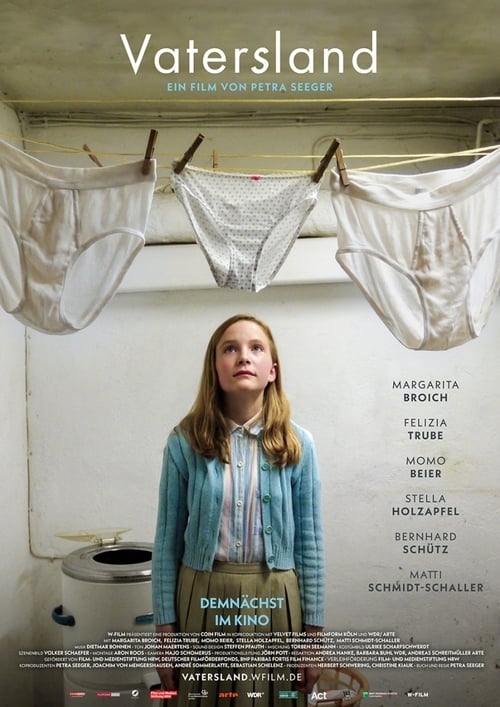
Vatersland
2020
No user ratings available yet
Representation score: 5.6 out of 10

Representation Score
Good
2015
Director
Johannes Fabrick
Runtime
90 minutes
Average Rating
No ratings yetNew Showbiz Analysis
Invisible Years is a character study centered on ideological departure and the struggle for individual autonomy. It succeeds in challenging traditional patriarchal structures by positioning the female protagonist against a conservative, capitalist father figure. However, the film lacks breadth in its social representation. The narrative remains focused on a localized German milieu, offering little engagement with racial, ethnic, or LGBTQ+ diversity. Ultimately, the film's progressive value lies in its critique of established social hierarchies and its exploration of radicalized, communal identities over traditional family units.
Category Breakdown
The film focuses on social belonging within communal living rather than queer identity. There is no explicit evidence of non-binary gender identities or narratives designed to critique the assumption that everyone is straight or cisgender.
Bea Kanter serves as a primary agent of change, moving from a domestic sphere to a radicalized academic environment. The film challenges patriarchal authority by framing her conservative father as an ideological obstacle.
The story maintains a relatively homogeneous demographic focus within a localized German social milieu. It prioritizes class and ideological distinctions over racial or ethnic diversity.
The narrative critiques traditional Western institutions and capitalist structures. It explores the deconstruction of conservative social norms through the protagonist's migration toward radical, anti-capitalist circles.
The plot centers on psychological and ideological shifts rather than physical or neurodivergent experiences. There is no documented evidence of characters with disabilities driving the narrative.
Present on Screen
Limited or Absent
Official Synopsis
After the death of her mother, Bea Kanter leaves her home in Hesse in order to start her studies in Frankfurt. She leaves her father Norbert and her younger sister Conny behind. Thanks to her fellow student Andrea, the shy student quickly finds a connection. She moves into a WG and is confronted with the left scene, the rebels of the 1970s. This fits in with her inner life, because she has to distract herself mentally from her father - a conservative entrepreneur, for Bea the epitome of the capitalist. So she becomes a radical rebel.
2020

2011
2019
1971
2009
2011
2021
1975
No reviews yet. Be the first to share your thoughts on this movie!
Use the rating form above to leave a star rating and optional review.