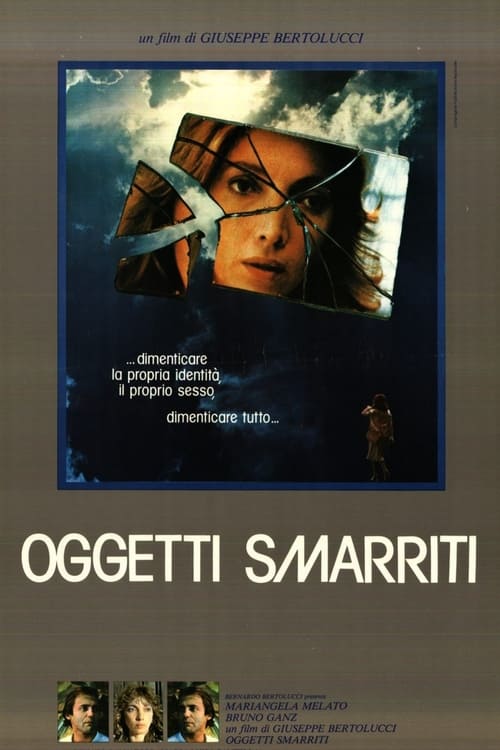
Lost and Found
1980
No user ratings available yet
Representation score: 5.2 out of 10

Representation Score
Good
1985
Director
Giuseppe Bertolucci
Runtime
95 minutes
Average Rating
No ratings yetNew Showbiz Analysis
Giuseppe Bertolucci’s drama succeeds in challenging patriarchal structures by focusing on female empowerment and psychological depth. The film uses a network of female experiences to question the stability of traditional social institutions. However, the film is limited by its homogeneous cast. The lack of racial diversity and the absence of explicit LGBTQ+ representation keep the focus strictly within a specific European context. Ultimately, the work explores social fragility and moral ambiguity. It replaces traditional moral certainty with a complex look at how personal secrets undermine the facades of family and community.
Category Breakdown
The film does not include explicit LGBTQ+ identities or same-sex relationships. It focuses on unfulfilled desires and societal breakdown rather than stories centered on queer identity or critiques of straight relationships.
The story challenges traditional gender roles by emphasizing a network of female experiences. It highlights the inner lives and actions of women, often making male-dominated institutions secondary to the protagonists' growth.
Set in rural Italy, the cast is uniform. This reflects the historical and geographic context but does not intentionally blend different races or promote diversity.
The film questions communal hypocrisy and traditional Western institutions. It portrays families and villages as fronts for hidden problems and systemic issues.
There is no central depiction of physical or mental disabilities. Psychological struggles and trance-like states are used as tools to explore existential themes rather than specific representations of disability.
Present on Screen
Limited or Absent
Official Synopsis
Young terrorist Laura shoots both a judge and a comrade, and over time her violent act becomes a thread linking the lives and fates of several other women. Each has her own secret, including the lawyer who listens to Laura as if in a ‘trance’: moments before, she discovered her husband was cheating.
1980

1975
1974
1960
1993
1969
1977
1977
No reviews yet. Be the first to share your thoughts on this movie!
Use the rating form above to leave a star rating and optional review.