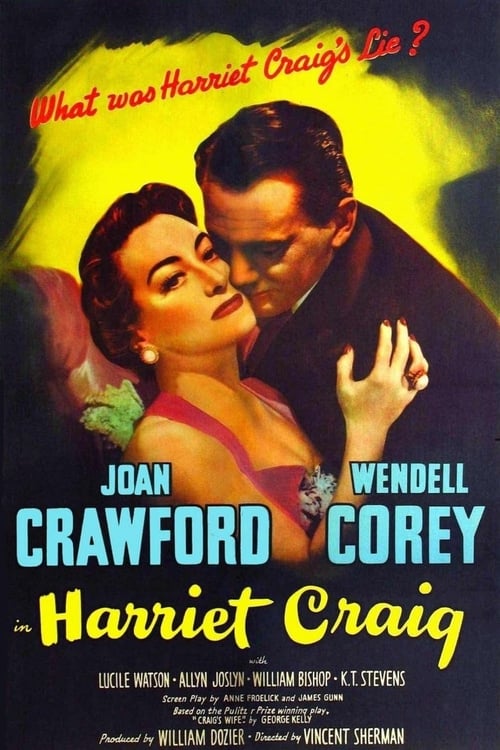
Harriet Craig
1950
No user ratings available yet
Diversity score: 4.5 out of 10

1936
NRDirector
Dorothy Arzner
Runtime
75 minutes
Average Rating
No ratings yetSynopsis
Harriet, Walter Craig's wife, is an upper-class woman obsessed with control, material possessions and social status whose behavior makes difficult her relationship with domestic service and family members.
Overall Score
Limited
Category Breakdown
LGBTQ+ Representation
The film focuses entirely on heteronormative marriage. No queer identities or subtext are present in the plot.
Gender Representation
Harriet is a complex protagonist with significant narrative agency. She challenges patriarchal domestic structures by asserting her own psychological autonomy.
Racial & Ethnic Diversity
The setting depicts a homogeneous, upper-class white social environment. There is a lack of diverse ethnic or racial representation.
Religious & Cultural Diversity
The story critiques class-based social standing and materialist obsessions. It deconstructs the stability of the traditional family unit through high-status dysfunction.
Disability Representation
No visible or invisible disabilities are portrayed within the main characters or the supporting cast.
Strengths
Areas for Improvement
AI Analysis
Dorothy Arzner directs a sophisticated domestic study that prioritizes female agency over standard studio-era tropes. While the film lacks demographic breadth, it succeeds in presenting a woman who refuses to be a passive participant in her marriage. The production is limited by its historical context, resulting in a lack of racial, ethnic, and LGBTQ+ representation. The narrative remains centered on a homogeneous, upper-class white social circle. Ultimately, the film's strength lies in its psychological depth and its critique of social hierarchies, even as it fails to provide diverse representation across most identity categories.
1950
1953
1931
1931
1932

1942
1933

1935

1944

1954

1934
1931
No reviews yet. Be the first to share your thoughts on this movie!
Use the rating form above to leave a star rating and optional review.