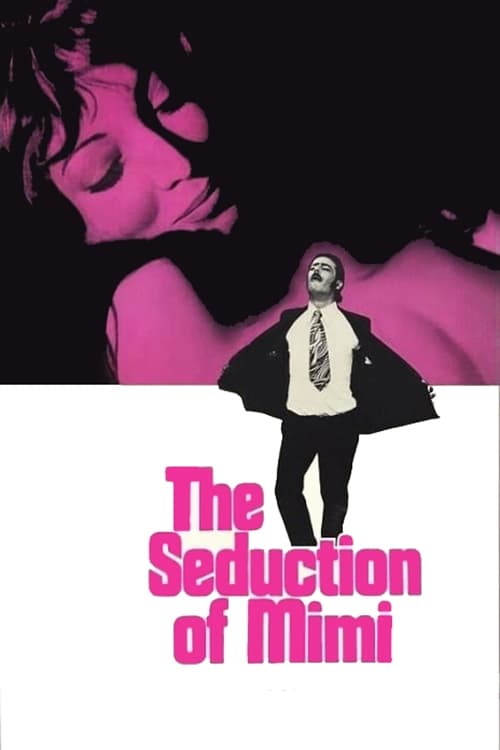
The Seduction of Mimi
1972
No user ratings available yet
Diversity score: 4.7 out of 10

1973
RDirector
Lina Wertmüller
Runtime
126 minutes
Average Rating
No ratings yetSynopsis
When his anarchist friend is killed trying to assassinate Mussolini, Tunin decides it's up to him to finish the job. While visiting a brothel, he meets a prostitute named Salome, who agrees to help, as her former boyfriend was also killed by Mussolini. They enlist the aid of another prostitute and hatch an elaborate plan, but as the fateful day quickly approaches, the women have second thoughts.
Overall Score
Fair
Category Breakdown
LGBTQ+ Representation
The narrative focuses on heterosexual tension between the protagonists. It does not explicitly feature LGBTQ+ identities or non-cisnormative gender expressions.
Gender Representation
The film disrupts conventional hierarchies by centering a female protagonist with significant economic agency. This complicates traditional submissive tropes through the intersection of gender and class.
Racial & Ethnic Diversity
Set in Fascist-era Italy, the film reflects a homogeneous social landscape. It lacks the intersectional racial breadth found in contemporary cinema, focusing instead on internal Italian stratification.
Religious & Cultural Diversity
The film offers a profound critique of Western institutional stability and capitalism. It uses an anarchist protagonist to challenge centralized authority and state-driven morality.
Disability Representation
There is no significant focus on visible or invisible disabilities. The narrative lens remains fixed on socioeconomic and political struggles rather than neurodivergence or physical disability.
Strengths
Areas for Improvement
AI Analysis
Lina Wertmüller’s work is a sophisticated deconstruction of the romantic ideal, replacing sentimentality with a rigorous materialist critique. The film succeeds in subverting gender hierarchies by granting the female lead economic agency, which disrupts traditional patriarchal power dynamics. However, the film is limited by its historical setting, resulting in a lack of racial and LGBTQ+ diversity. The narrative remains centered on the homogeneous social landscape of Fascist-era Italy, which restricts its intersectional breadth. Ultimately, the film's strength lies in its cultural and political depth. It uses class warfare and anti-capitalist themes to interrogate how systemic oppression dictates human agency and intimacy.
1972
1985
1963
1978
No reviews yet. Be the first to share your thoughts on this movie!
Use the rating form above to leave a star rating and optional review.