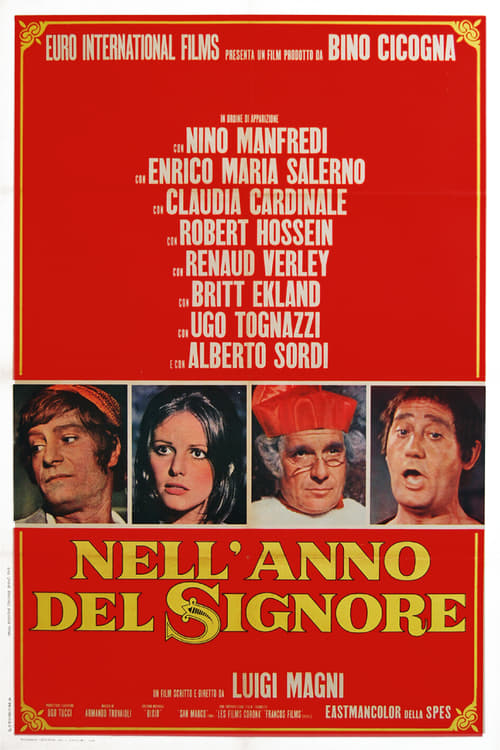
My Uncle Benjamin
1969
No user ratings available yet
Representation score: 3.5 out of 10
Representation Score
Fair
2000
Director
Luigi Magni
Runtime
109 minutes
Average Rating
No ratings yetNew Showbiz Analysis
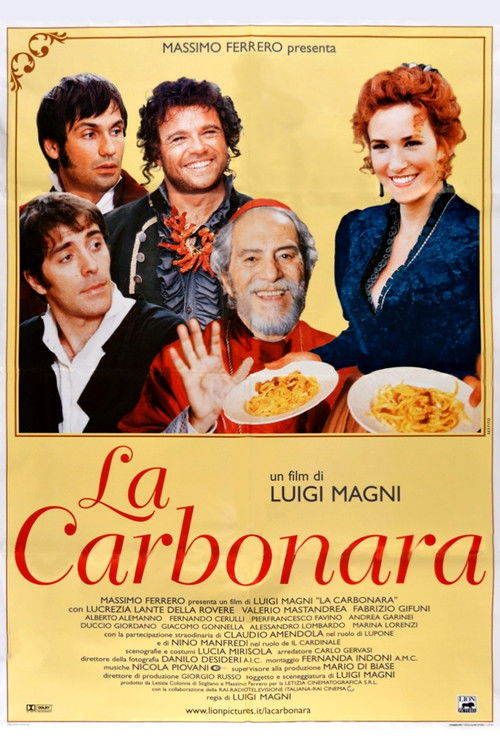
La carbonara is a historical comedy that excels in challenging institutional authority. By focusing on the struggle of the Carbonari against the Papal hierarchy, the film emphasizes secular revolutionary ideals over religious dogma. The film also offers a fresh perspective on gender roles for its time. Cecilia is not a passive participant but a central driver of the plot, managing an inn and dealing with complex political ties. However, the film adheres to traditional social norms regarding race and sexuality. The casting and romantic structures reflect the homogeneous and straight-centered environment of the era, lacking modern identity diversity.
Category Breakdown
The story revolves around heterosexual romantic relationships involving Cecilia, her husband, and her lover. There is no indication of non-binary gender identities or critiques of traditional romantic structures.
Cecilia plays a central and active role in managing her inn and navigating political connections. Her strong presence challenges the patriarchal norms typically found in period dramas.
The film depicts the ethnically homogeneous society of the Italian unification era. It emphasizes class differences rather than racial diversity or casting actors from various ethnic backgrounds.
The narrative portrays religious and political institutions as oppressive forces. It highlights secular revolutionary ideals over ecclesiastical control and religious doctrine.
There are no visible or implied disabilities shown or central to the character development in the narrative.
Present on Screen
Limited or Absent
Official Synopsis
Cecilia is a commoner who runs an inn, where the specialty is the "spaghetti alla carbonara". Moreover, the woman is tied to the movement of young patriots, named "Carbonari", who want a united Italy, and are struggling against the power of the pope. Cecilia believes she lost her husband in a fatal accident, and has made a new lover: Fabrizio, who is also a patriot. One day the guy's saved by a monk, when he is about to be imprisoned by the soldiers of Cardinal Rivarola. The monk is the husband of Cecilia, not dead in the accident, and now he helps her to fight against the power of Rome with the Carbonari.
1969

1973
2022
1972
1955
1969
2025
2006
No reviews yet. Be the first to share your thoughts on this movie!
Use the rating form above to leave a star rating and optional review.