
The Greedy
1967
No user ratings available yet
Representation score: 2.5 out of 10
Representation Score
Minimal
1963
Director
Dinos Katsouridis
Runtime
96 minutes
Average Rating
No ratings yetNew Showbiz Analysis
World Gone Mad is a mid-century Greek comedy that focuses on traditional social satire. It centers on class conflict and the comedic tension between a working-class clerk and an aristocratic shop owner. The film relies heavily on conventional social structures. While it provides a critique of individual pretension, it lacks the complexity of multi-layered or systemic deconstruction found in more progressive cinema. The narrative is set in a homogeneous, traditional context that prioritizes local class dynamics over broader representation of underrepresented identities.
Category Breakdown
The film does not include any LGBTQ+ characters or stories about non-assuming gender matches what was assigned at birth identities. The plot revolves around a traditional romantic relationship between a wealthy man and a young woman.
The story is centered around male-driven conflicts between a clerk and his boss. The female lead mainly serves as a plot device, embodying the traditional 'poor girl' stereotype with minimal influence over the plot.
As a localized Greek comedy, the cast is predominantly of the same ethnicity. The narrative emphasizes local class differences rather than racial diversity.
The film criticizes class pretension and social posturing but stays within traditional social hierarchies and local morality. It does not address broader institutional issues.
The film does not feature any characters with visible or invisible disabilities. The narrative does not incorporate neurodivergence or mental health conditions.
Present on Screen
Limited or Absent
Official Synopsis
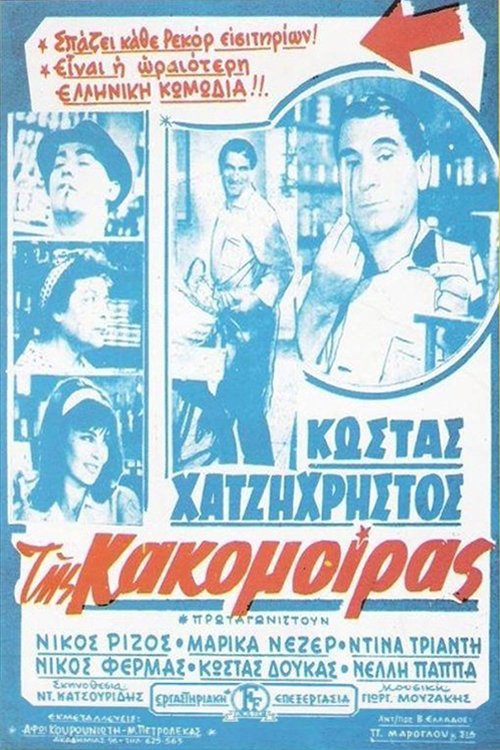
This classic Greek comedy revolves around the constant fights between Zikos who works as a clerk at a small grocer's shop and the shop's owner. Zikos just can't keep his mouth shut every time his boss behaves as being an aristocrat. Things go even worse when Zikos finds out that his boss, by taking advantage of his wealth and with the help of the local match-maker, is planning to marry a young poor girl living in the same neighborhood.
1967

1980

1967

1978
1953

1966

1970
1968
No reviews yet. Be the first to share your thoughts on this movie!
Use the rating form above to leave a star rating and optional review.