Gasparone
1937
No user ratings available yet
Representation score: 2.0 out of 10
Representation Score
Limited
1934
Director
Grigori Aleksandrov
Runtime
96 minutes
Average Rating
No ratings yetNew Showbiz Analysis
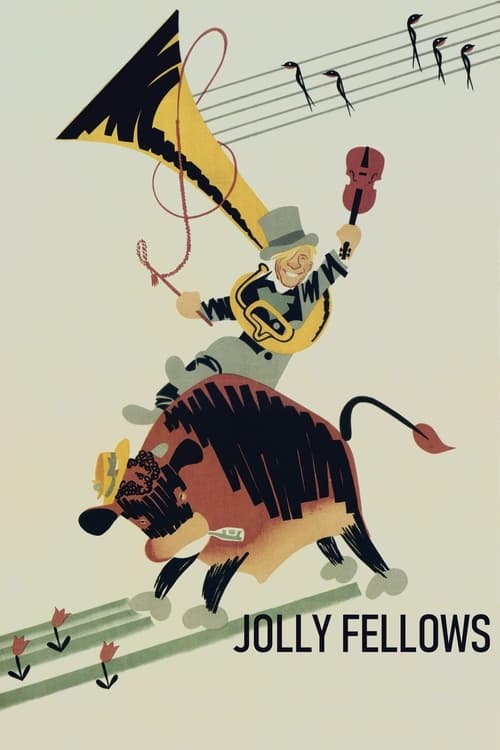
Jolly Fellows is a foundational Soviet musical that emphasizes collective identity and state-sanctioned joy. It successfully portrays a secular, communal spirit that celebrates the 'new Soviet citizen' through music and shared recreation. However, the film's interpersonal dynamics are deeply traditional. It operates within a rigid framework that assumes everyone is straight or cisgender, relying on conventional gender roles that limit its social breadth despite its progressive political messaging. While it captures a multi-ethnic atmosphere, it does so through a lens of homogenization rather than celebrating specific ethnic identities.
Category Breakdown
The film strictly centers around heterosexual relationships, focusing on the romance between Kostya and Anyuta without any representation of same-sex intimacy or non-cisgender identities.
Female characters like Anyuta play crucial roles, adding charm and emotional depth. However, the story follows traditional gender roles, emphasizing a conventional hierarchy centered on the male lead.
The film showcases a multi-ethnic Soviet society but prioritizes a unified Soviet identity, minimizing the distinct ethnic identities of its characters.
The film promotes secularism and atheism, highlighting the collective over the individual, framing state-sanctioned leisure as a pinnacle of social achievement.
The narrative focuses solely on able-bodied individuals, with no significant representation of characters with physical or neurodivergent conditions.
Present on Screen
Limited or Absent
Official Synopsis
Merry Fellows was the first Soviet musical comedy. Set in Odessa and Moscow in the 1930s. Shepherd Kostya Potekhin is mistaken for an international concert star. He falls in love with Anyuta and plays the "star" for her. In a cascade of comic musical numbers he becomes the leader of a Jazz-Band and gives a hilarious show at the Odessa Music Hall. Now he is destined to perform at the Bolshoi Theatre in Moscow.
1937
1936
1933

1938
1939

1929
1937
1935
No reviews yet. Be the first to share your thoughts on this movie!
Use the rating form above to leave a star rating and optional review.