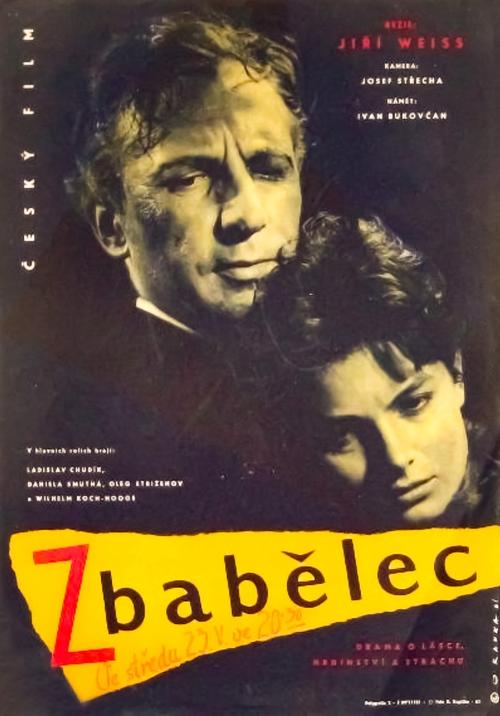
The Coward
1962
No user ratings available yet
Representation score: 3.9 out of 10

Representation Score
Good
1965
TV-MADirector
Zbyněk Brynych
Runtime
98 minutes
Average Rating
No ratings yetNew Showbiz Analysis
The film is a psychological study of individual ability to act against systemic oppression. It uses surrealism to critique the Nazi occupation, focusing more on existential themes than demographic representation. While it lacks explicit markers for LGBTQ+ or racial diversity, it subverts authority through its portrayal of the 'othered' fugitive. The film's strength lies in its deconstruction of institutional morality. Ultimately, the work prioritizes psychological depth and political critique over contemporary multi-layered visibility, making it a profound but demographically narrow historical drama.
Category Breakdown
The film focuses on existential dread and psychological siege rather than identity politics. There are no explicit LGBTQ+ character arcs or critiques of the assumption that everyone is straight or cisgender present in the narrative.
The story prioritizes the protagonist's internal psychological state over interpersonal gender dynamics. It avoids traditional romantic clichés but does not explicitly center on the empowerment of female characters.
Casting reflects the localized ethnic realities of Nazi-occupied Czechoslovakia. The narrative uses the 'othered' status of political fugitives as a metaphor for underrepresented experiences under totalitarianism.
The film excels at critiquing traditional power structures and institutional stability. It portrays the state as an oppressive force, using surrealism to deconstruct Western institutionalism and social contracts.
The narrative utilizes psychological fragmentation and paranoia as central drivers. Mental instability is treated as a logical response to a fractured reality rather than a character flaw.
Present on Screen
Limited or Absent
Official Synopsis
In Nazi-occupied Czechoslovakia, a doctor-turned-warehouse employee reluctantly agrees to treat a gravely wounded political fugitive, putting himself and everyone living in his building complex in danger.
1962

1945

1959

1965
1960

1943
1955
2016
No reviews yet. Be the first to share your thoughts on this movie!
Use the rating form above to leave a star rating and optional review.