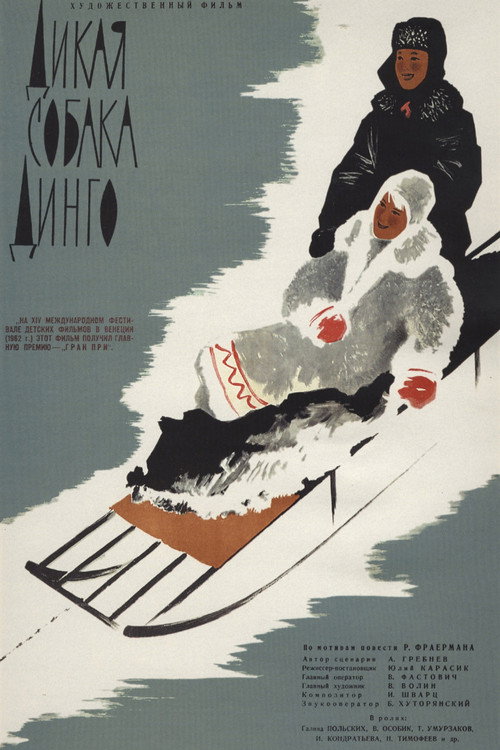
The Wild Dog Dingo
1962
No user ratings available yet
Representation score: 2.9 out of 10
Representation Score
Fair
1967
Director
Radomir Vasilevsky
Runtime
80 minutes
Average Rating
No ratings yetNew Showbiz Analysis
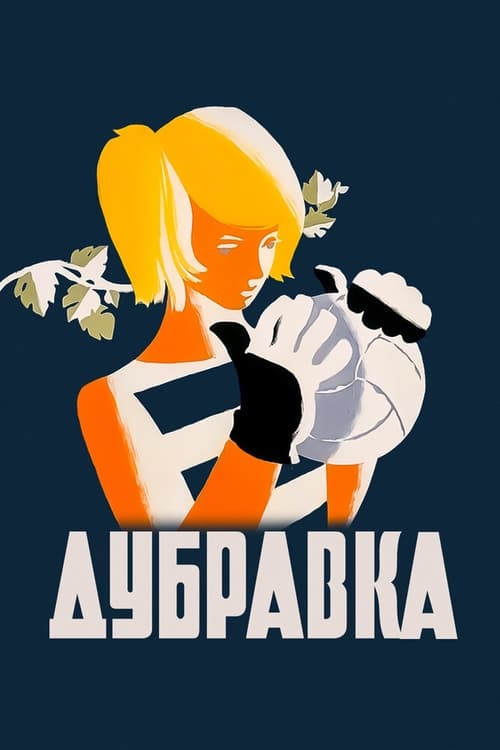
Dubravka is a character-driven coming-of-age story that emphasizes female empowerment. By showcasing a protagonist who is active, adventurous, and physically engaged, the film moves away from traditional mid-20th-century feminine stereotypes. However, the film stays within the conventional storytelling boundaries of its era. It lacks the layered exploration of social structures and broader societal issues, focusing instead on individual psychological growth. Identity is explored primarily through developmental stages, such as adolescent emotions, rather than diverse social or political identities.
Category Breakdown
The film portrays Dubravka's strong emotional connection to an older woman named Valentina Grigorievna. This seems to be an adolescent infatuation rather than a queer romantic relationship. The film does not include clear markers of non-traditional gender identities.
Dubravka challenges traditional feminine stereotypes through her active lifestyle. She is shown playing soccer, swimming, and racing, which presents her as a spirited and dynamic character rather than a passive or domestic figure.
Set in the Crimea, the film reflects the region's demographic makeup of the time. However, it focuses more on personal relationships and interactions rather than exploring a mix of ethnicities or racial complexities.
The story is set within a realistic social context, focusing on the psychological conflicts of growing up. It does not delve into religious conflicts or critiques of institutional structures like the state.
There are no visible or invisible disabilities that play a role in the story's narrative arc.
Present on Screen
Limited or Absent
Official Synopsis
In the Crimea, on the shore of the Black Sea lives a girl nicknamed Dubravka. The girl plays soccer, swims in the sea, runs with boys in a race and often becomes a participant of any adventure. But the time comes - and Dubravka begins to grow up. She is as if in a “suspended” state: she is no longer interested in playing with boys, and older boys and girls do not pay much attention to her or perceive her as a child. In the house Dubravka settles vacationer Valentina Grigorievna. The girl likes her so much that Dubravka even “fell in love” with her. Dubravka's neighbor, the lonely father Peter Petrovich, and Valentina sympathize with each other, and Dubravka becomes very jealous of her. The girl does not know where to go from the contradictions simmering in her.
1962
1958
1975
1964
1977
1972
1956
1978
No reviews yet. Be the first to share your thoughts on this movie!
Use the rating form above to leave a star rating and optional review.